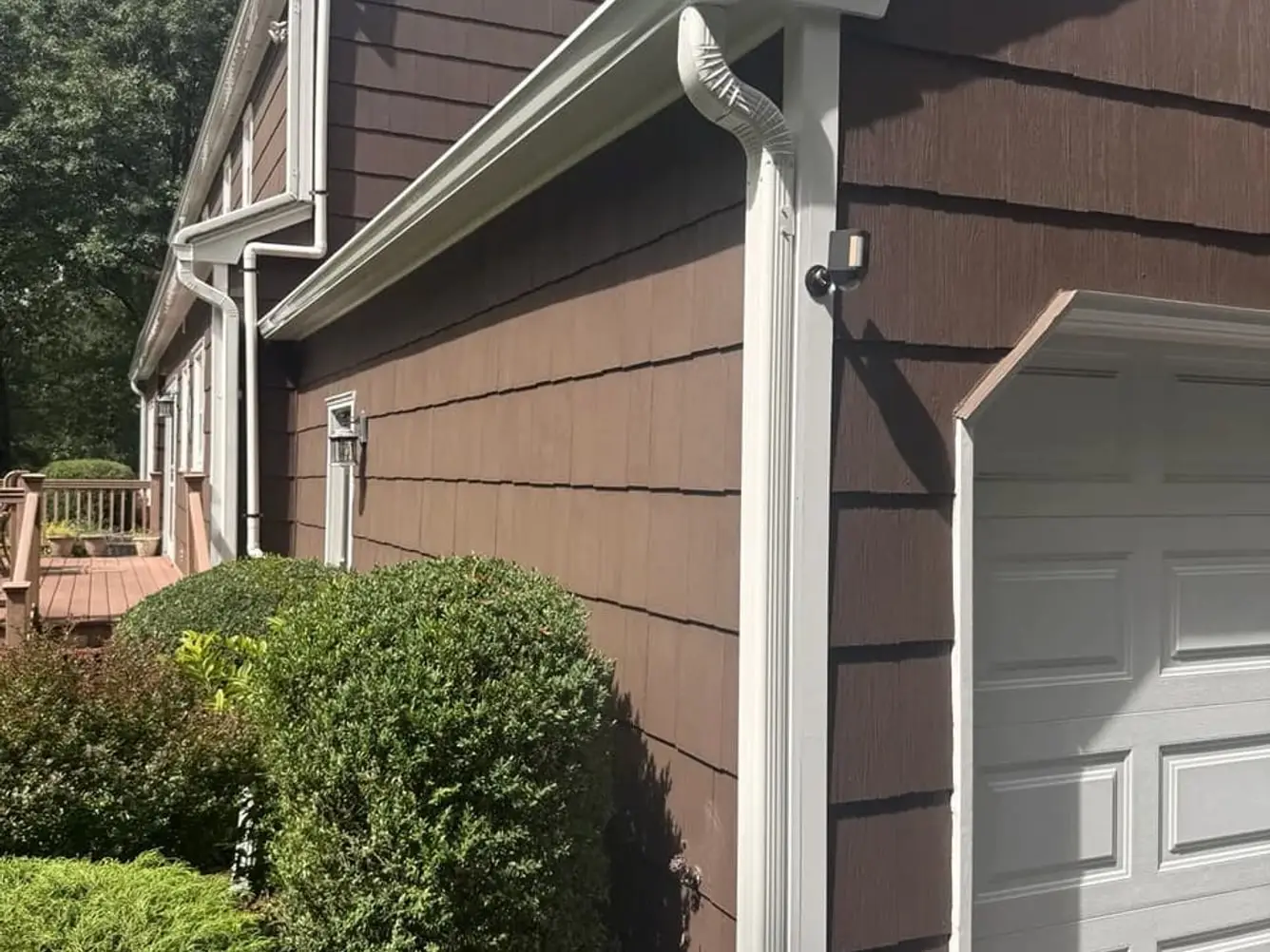
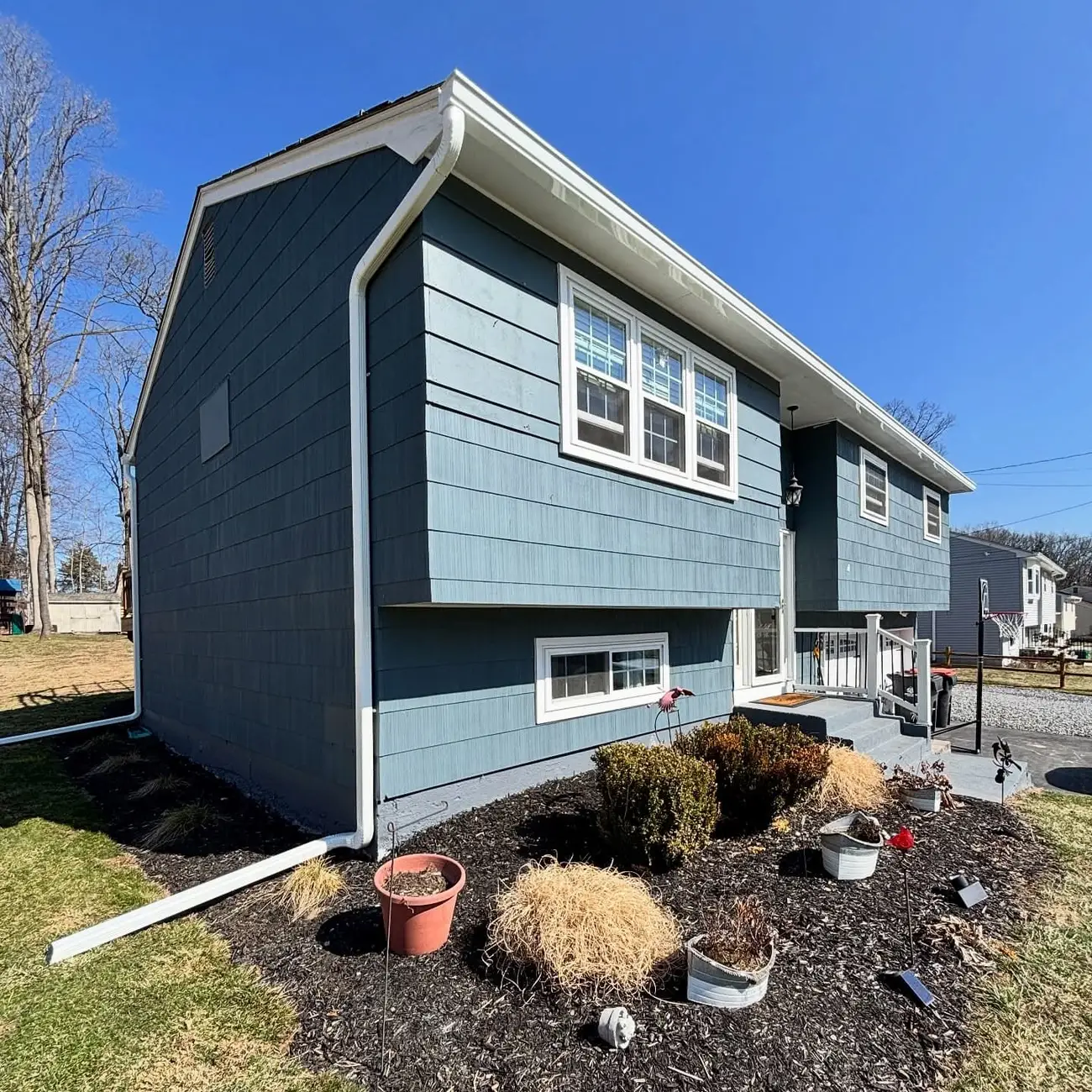
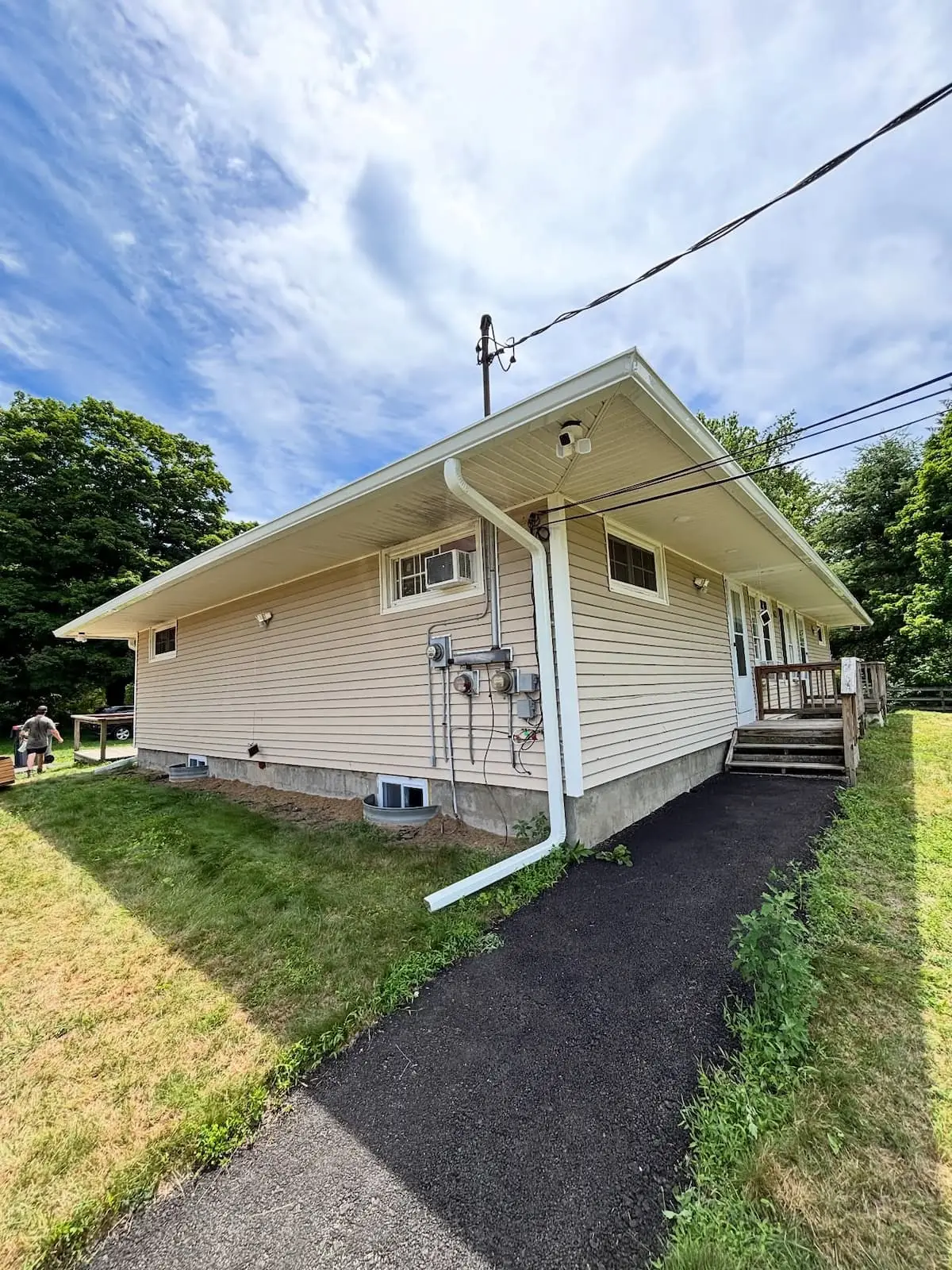
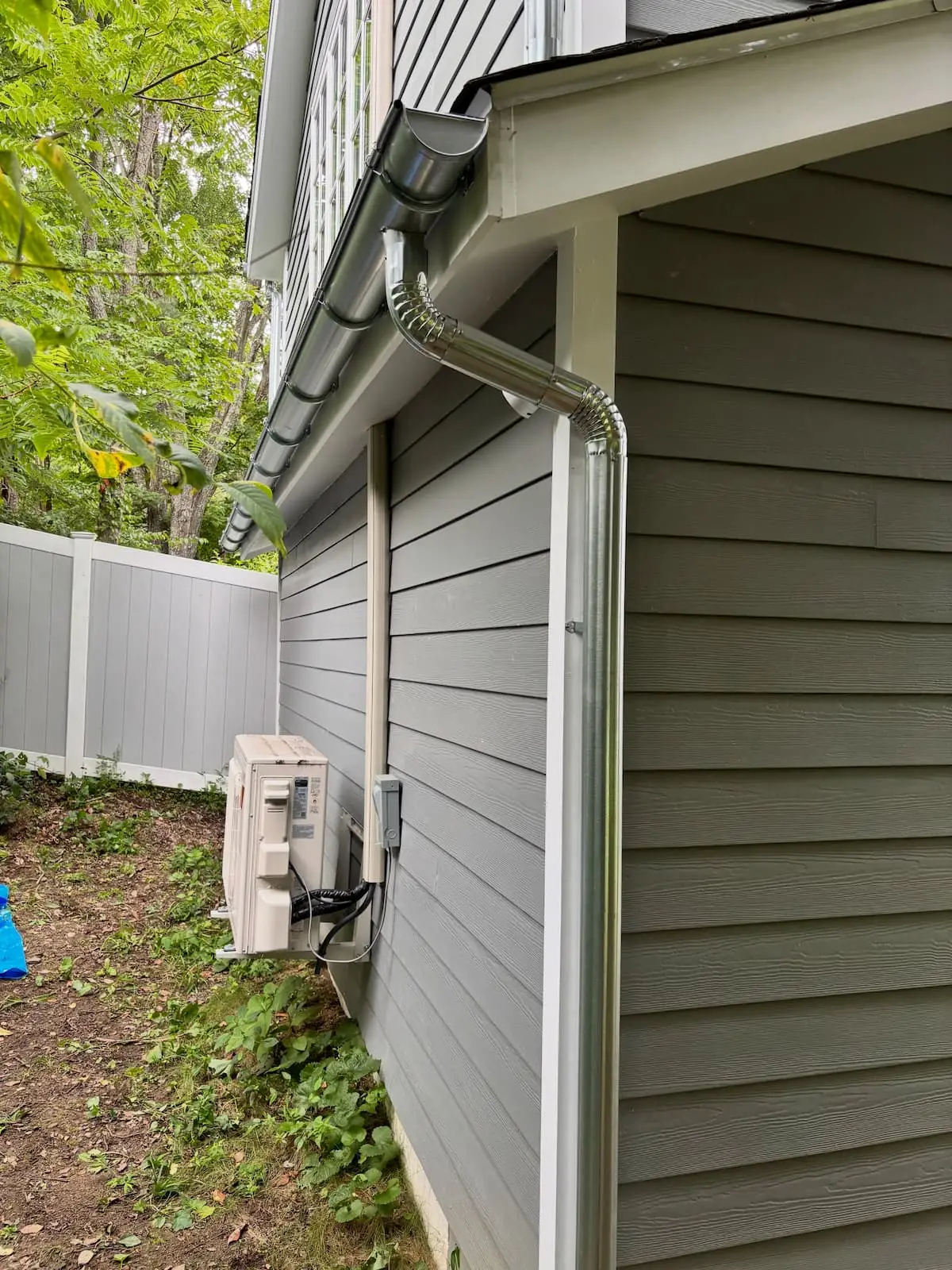
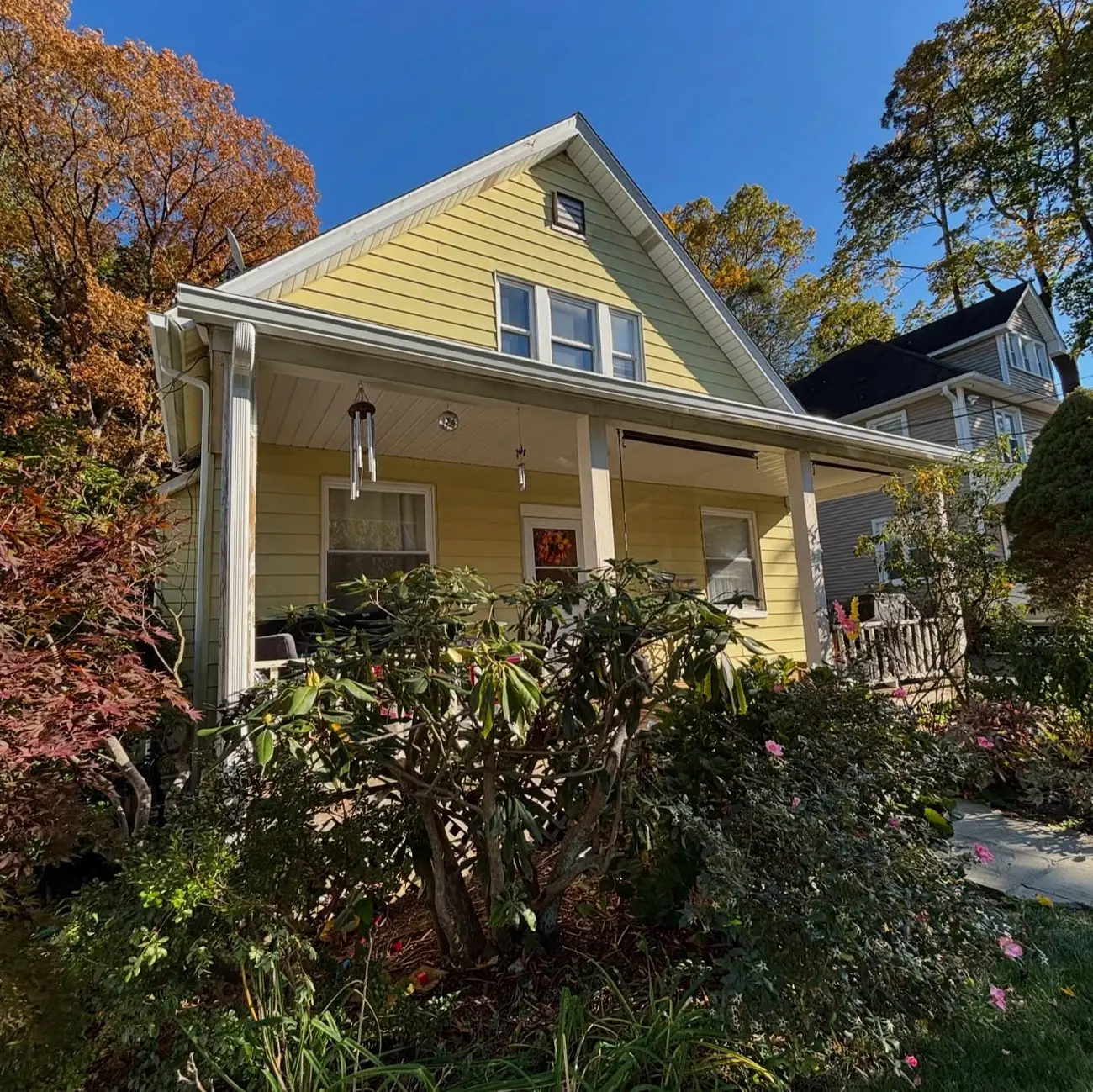
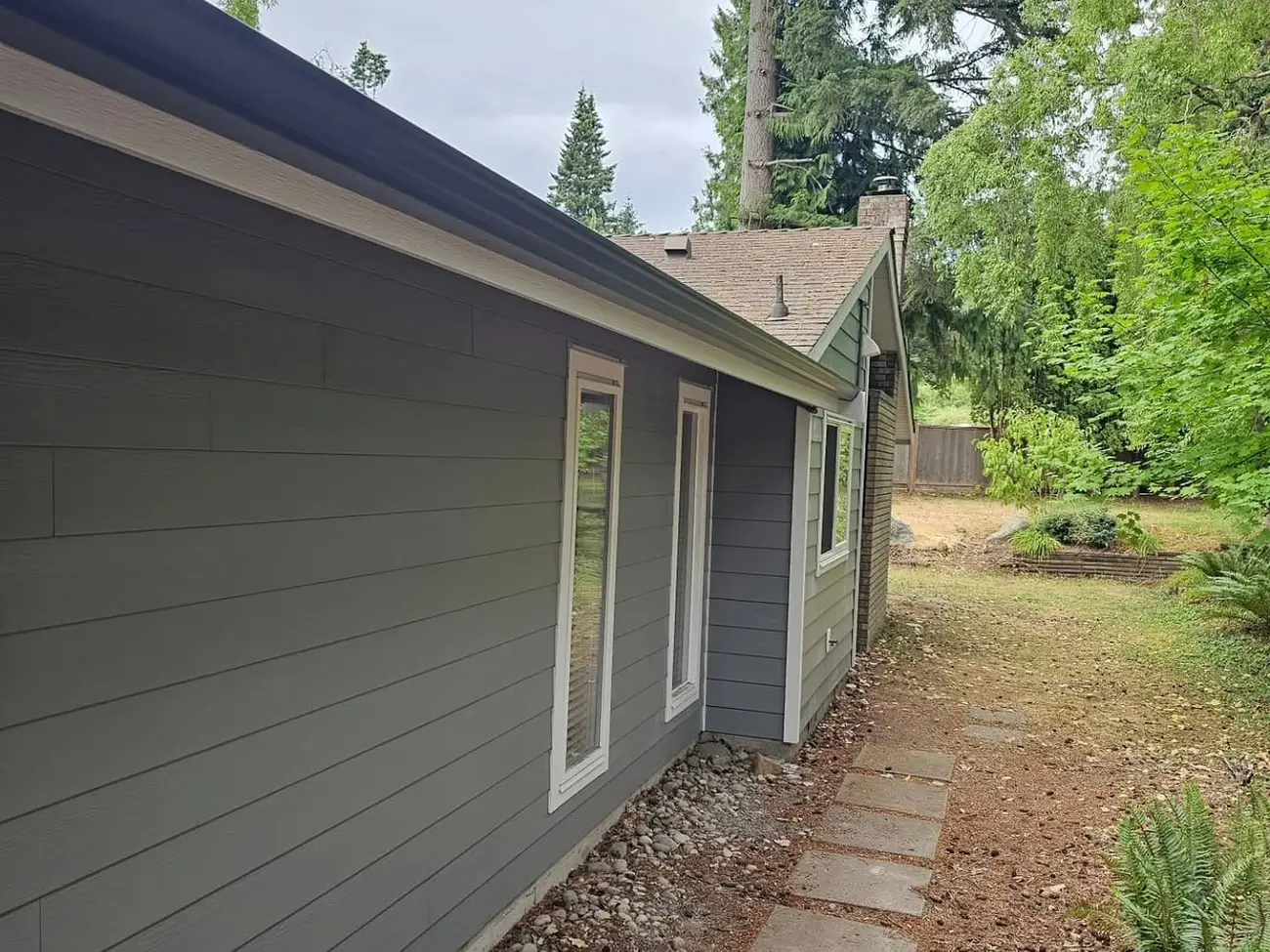
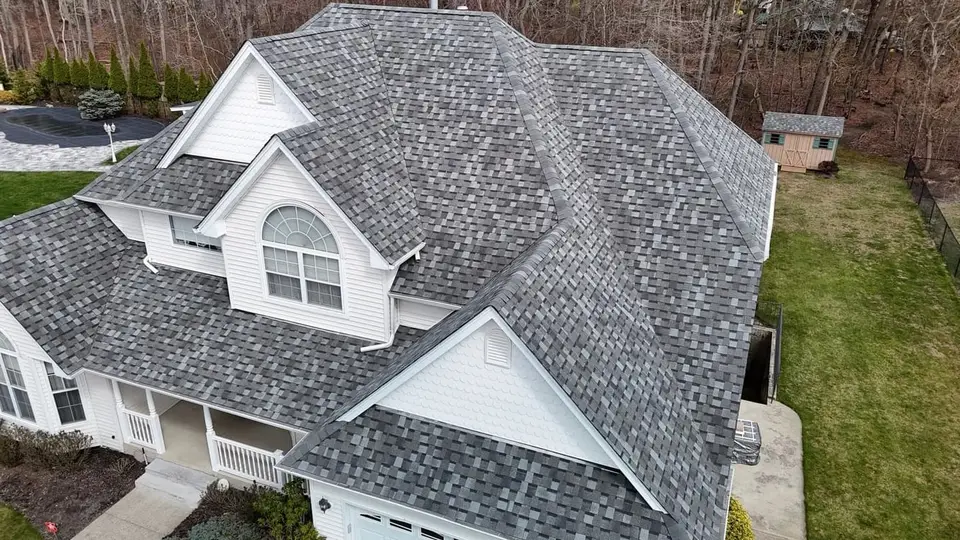
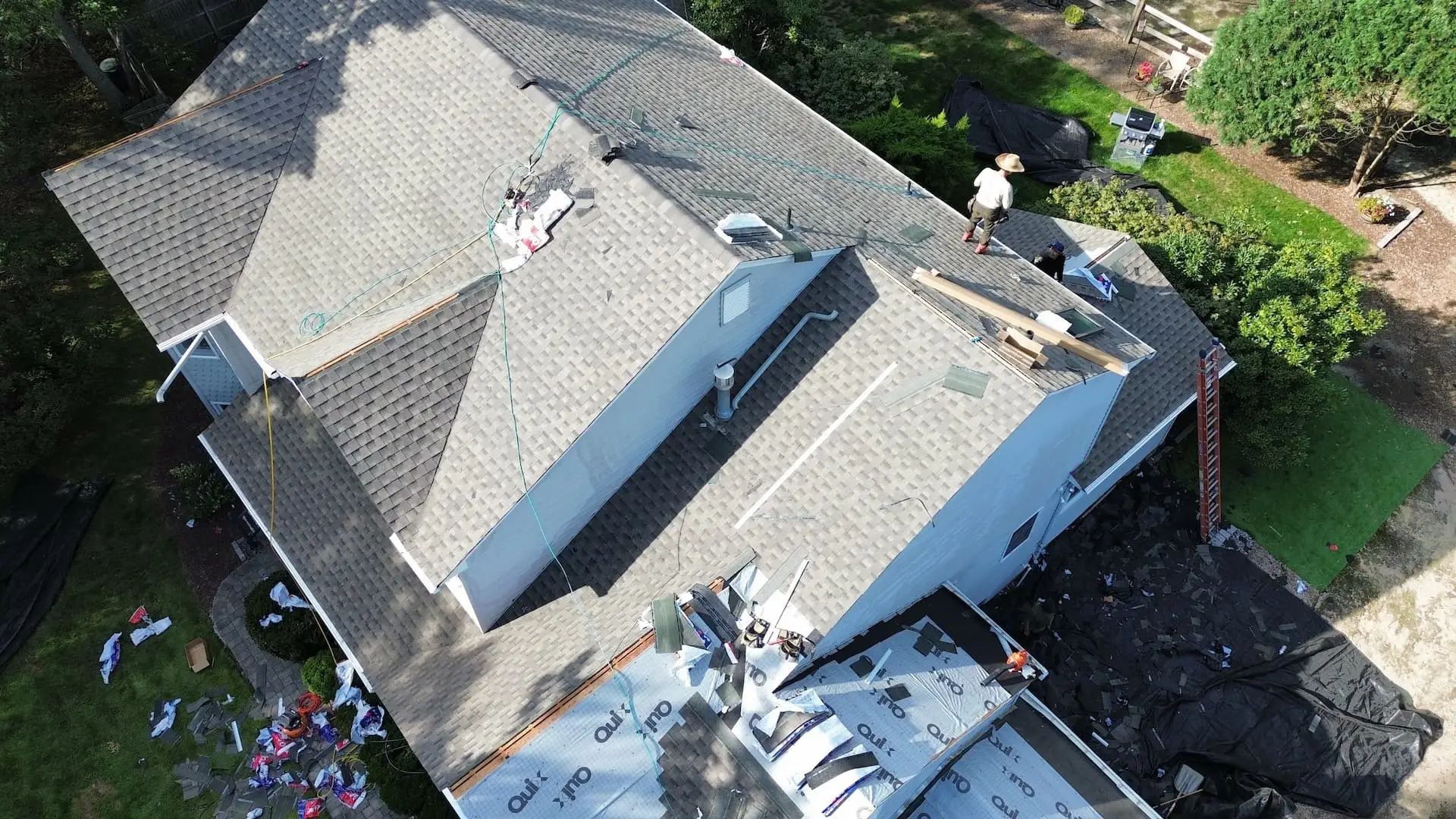
On a house built in the 1990s or later, the gutters may still be the ones that went up with the house. When a gutter overflows in a heavy rain or still holds water the next day, the run is usually too small for the roof above it or slopes the wrong way.
Close to the water, salt air works on the metal: the gutter itself, the hangers and the fasteners behind them. A nor'easter, most often between October and April, blows rain across the roof and fills the gutters fast. A loose hanger lets a run sag, and a sagging run holds water.
In Lakewood and Manchester, where many homes are attached, one gutter can run across several houses. Who owns it depends on the association, and each downspout has to land where it does not send water toward the next unit.
The price comes after we have looked at the board behind the gutter, the roof that drains into each run, and where every downspout ends.