
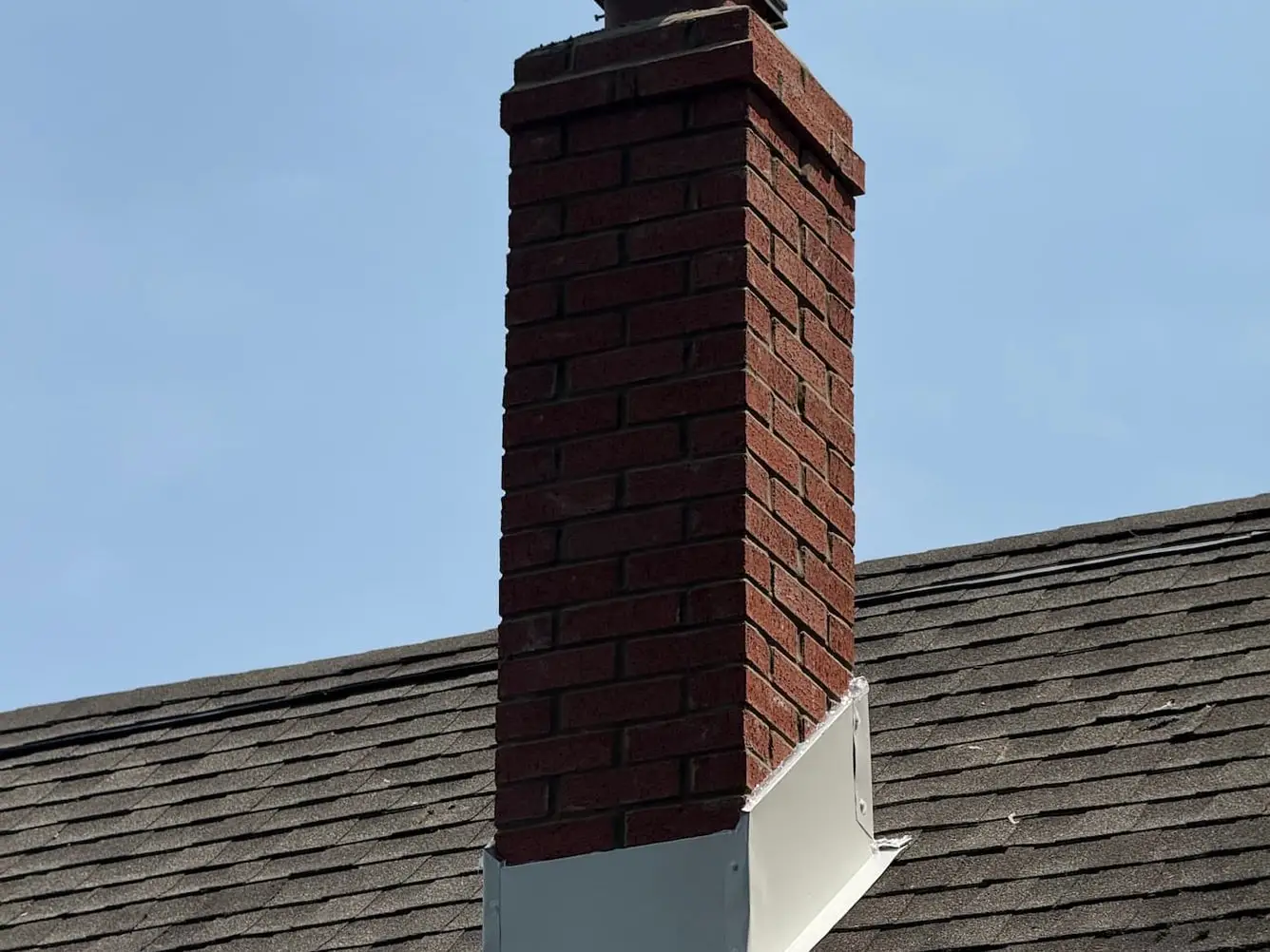
Chimney repair in Morris County, NJ
One Morris County home in eight heats with oil, about twice the New Jersey rate. On many of them the boiler still sends its exhaust up the brick chimney, and that wears the flue and the top of the stack from the inside.
NJ HIC 13VH13268400 · Licensed and insured · Free inspection · Open 24 hoursModern Home Roofing & Chimney repairs brick chimneys on houses across Morris County, NJ, including Jefferson, Kinnelon, Roxbury and Washington Township. In Jefferson more than half the homes heat with oil, and an oil boiler leaves soot and moisture in the flue. We repoint joints, rebuild crowns and reseal flashing after looking down the flue. NJ HIC 13VH13268400.
Where oil heat is still common
Countywide, oil heats about 12 percent of homes. In some towns the share runs far higher: 55 percent in Jefferson, 33 percent in Kinnelon, 30 percent in Washington Township and 28 percent in Roxbury. On many of those houses the boiler vents into a masonry chimney.
Oil exhaust leaves soot behind in the flue, and it carries moisture. In a flue that runs cold, some of that moisture condenses before it gets out. Year after year it works on the liner and on the mortar near the top of the stack, which is also the part that freezes hardest.
Jefferson also has 11 percent of homes on propane, against 2 percent statewide, and propane exhaust carries water vapor too. Whatever the fuel, frost finishes the job. Water gets into an open joint or a cracked crown, freezes, and pries the brick apart.
Before we price a chimney, we get to the top, look at the crown and the upper courses, and look down the flue as far as we can see. You get the photos.
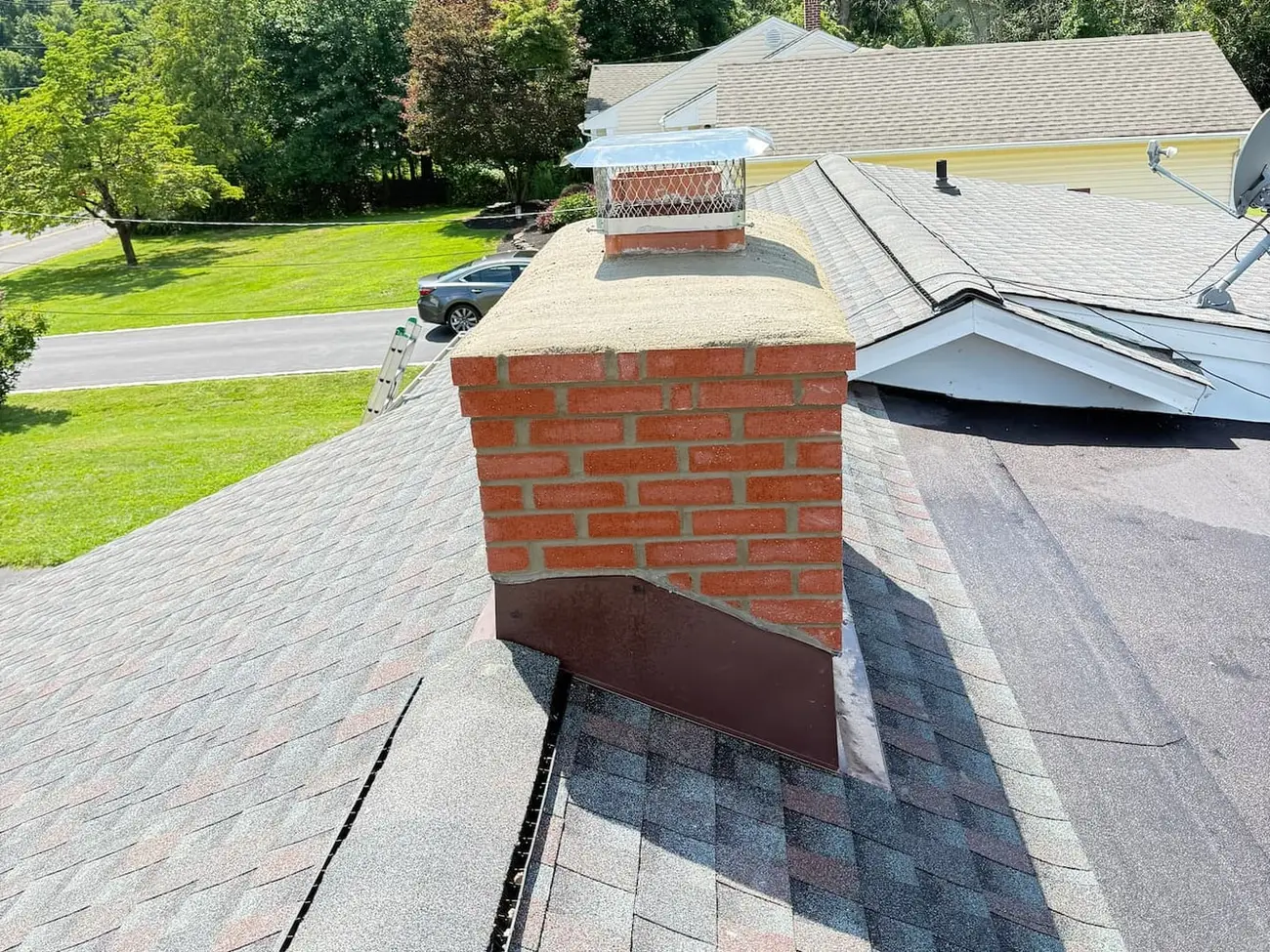
At the top of an oil-heated chimney
On these chimneys the damage shows up in two places: at the top, where weather hits all four sides, and inside the flue, where the exhaust does its work. Both get checked.
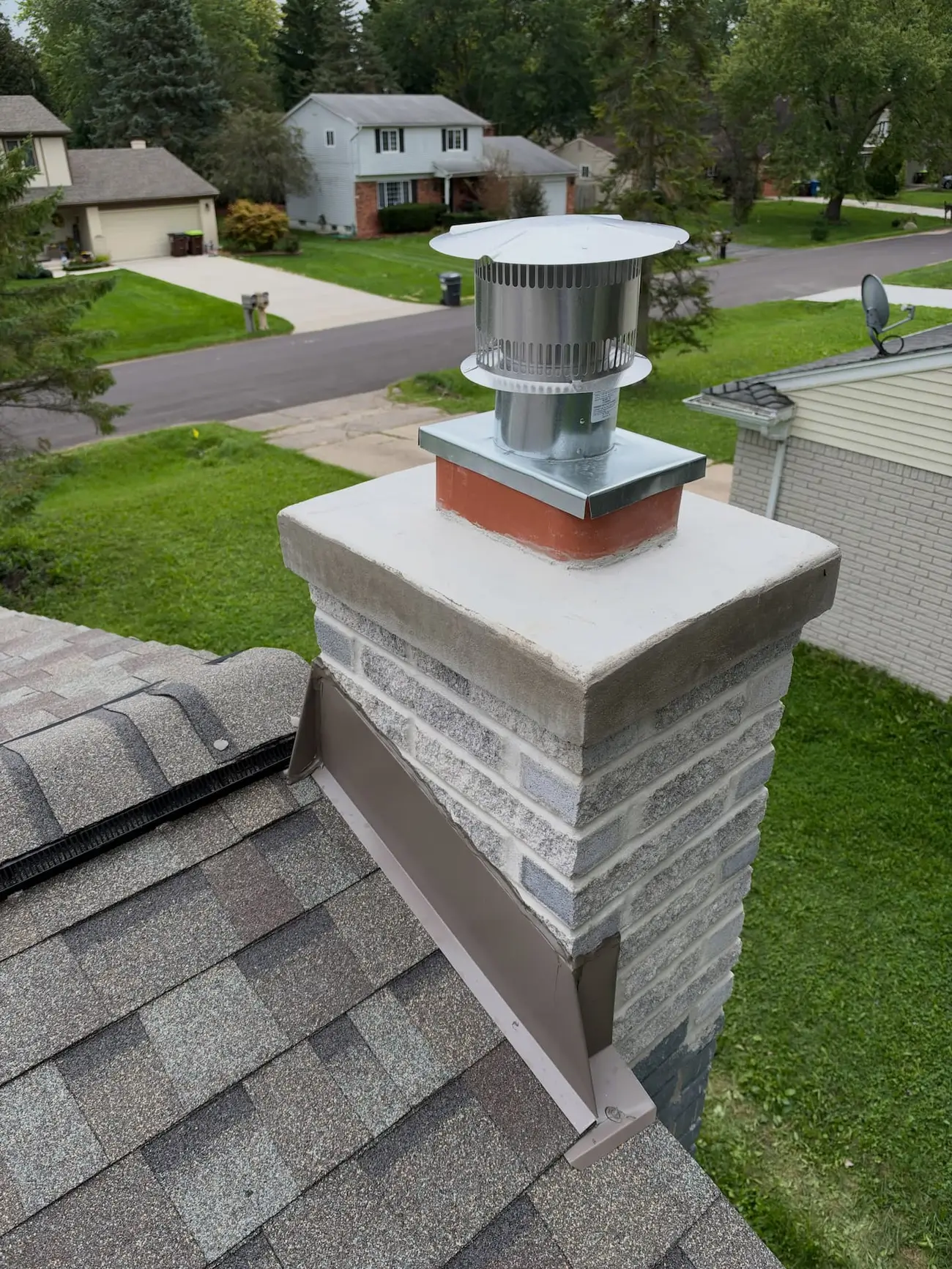
What we note
- How much soot coats the flue, as far down as we can see.
- Cracked, shifted or missing sections of clay liner.
- Crumbling mortar in the top courses, where the moisture gathers.
- The crown, for cracks that let water into the brick.
- Whether a cap keeps rain and snow out of the flue.
- Dark or white staining on the outside of the brick.
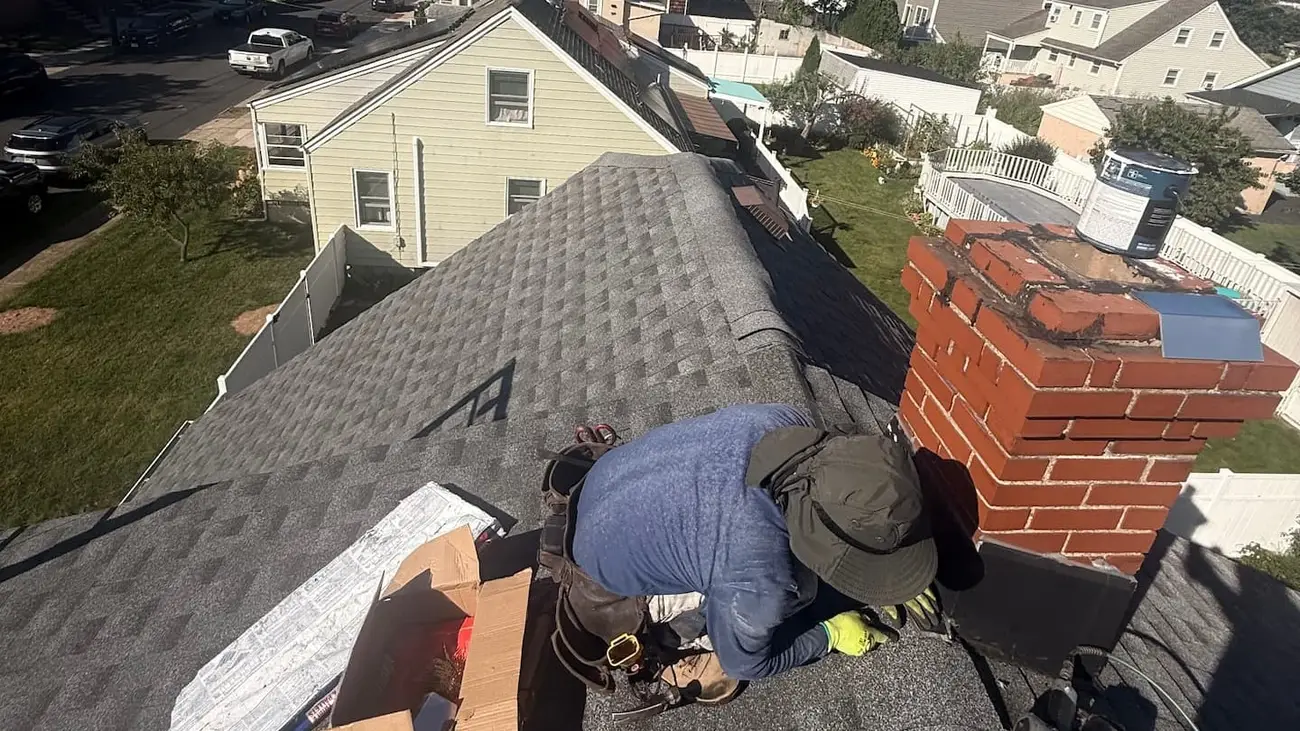
If the top courses move under a push and the crown is split clean through, fresh mortar will not save them. Then we price a rebuild. Chimney rebuilding in Morris County
How a chimney repair works in Morris County
The top of the chimney gets as much attention as the brick, because that is where most chimney leaks start. All seven steps are on the chimney repair page.
Free inspection
We get up to the top when it is safe to and photograph the cap, crown, flue, brick and flashing.
Written estimate
Which joints, which brick, what else needs work and the price, on paper. Any permit goes on it too.
Repoint and replace bad brick
We grind out the failed mortar, pack in new mortar and tool it to shed water. Cracked brick comes out and new brick goes in.
Fix the top and clean up
If the crown is cracked, the cap is missing or the flashing has lifted, that is on the estimate too. Then we clear the roof and the ground and show you the photos.
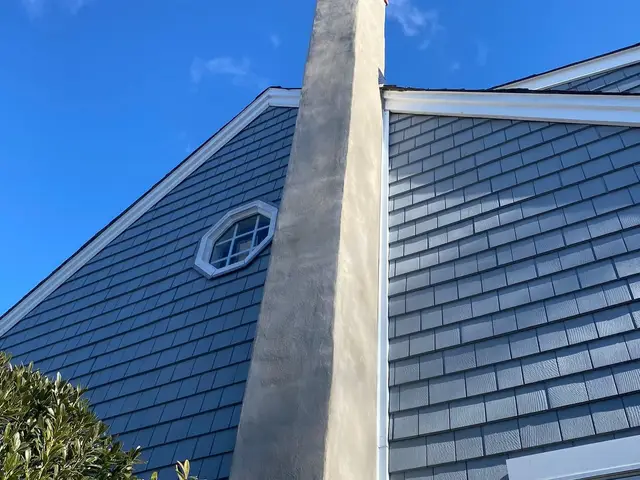
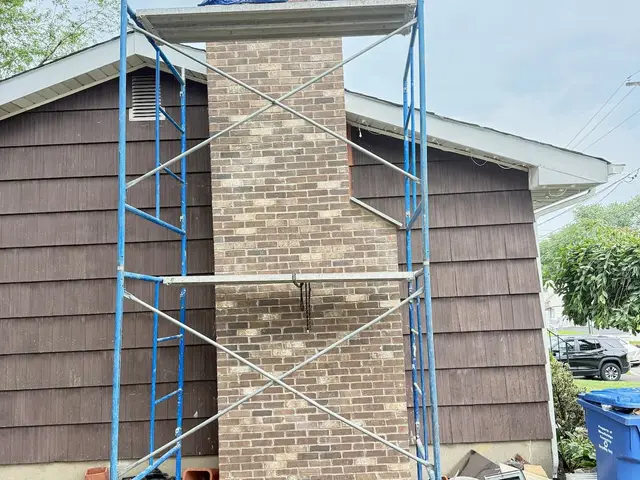
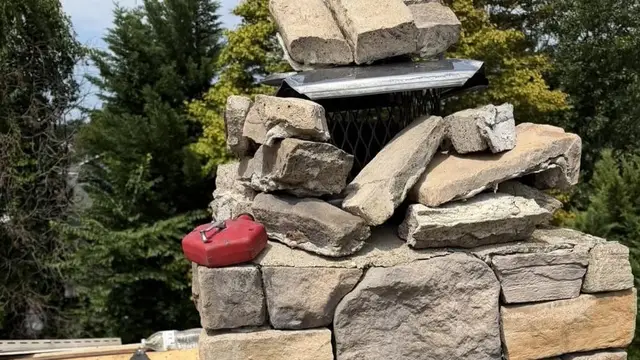
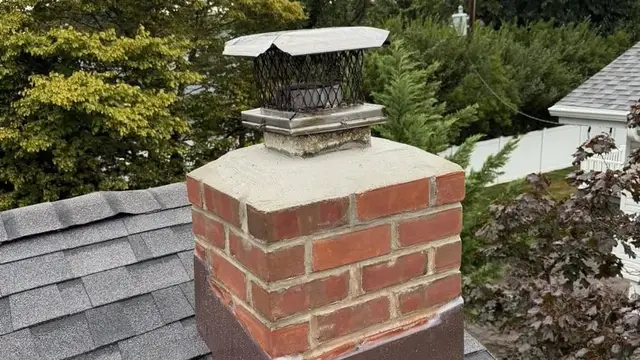
Do you need a permit for chimney repair in Morris County?
It depends on your town. Chimney masonry is not on New Jersey's list of ordinary maintenance or minor work, so the construction office in your town decides what paperwork it needs. Mendham Borough has a historic district, where exterior work that needs a permit also needs Historic Preservation Commission review, and roofing and siding changes are reviewed too. We check with your town before we start, and any permit goes on the estimate.
What you can check on us first
- Our New Jersey Home Improvement Contractor license is 13VH13268400. Look it up with the Division of Consumer Affairs.
- We carry insurance and can send you the certificate before work starts.
- The inspection is free, and the estimate comes to you in writing.
- We are open 24 hours.
If it is in Morris County, yes. We cover all 39 municipalities, from Boonton to Wharton. Put your ZIP code in the estimate form and we confirm it when we call you back.
Stains on the outside brick, mortar grit on the roof below the chimney, and bits of clay at the base of the flue. Any of those can mean moisture is working on the flue or the mortar. We look at it during the inspection and show you in photos.
Yes, if anything still vents up it. Gas exhaust carries a lot of water vapor too, and a flue that was sized for an old oil boiler can run cold with a newer furnace. We note what is connected and look down the flue where we can.
How many joints need new mortar, how many bricks are broken, and whether the crown, cap or flashing needs work. A tall stack on a two-story house takes more setup. We do not quote over the phone. You get a written price once we have seen the top.
The town decides. Chimney masonry is not on the state list of work that skips a permit, so it is up to the local construction office. We ask before starting and put any permit on the estimate. In Mendham Borough's historic district, work that needs a permit also needs Historic Preservation Commission review.
See what the boiler has done to your flue
Send us your town and what you have noticed. We call you back shortly, inspect the chimney at no charge, and give you photos and a written price. If a smaller repair will do, that is the one we price.
Or call 732-682-9251