
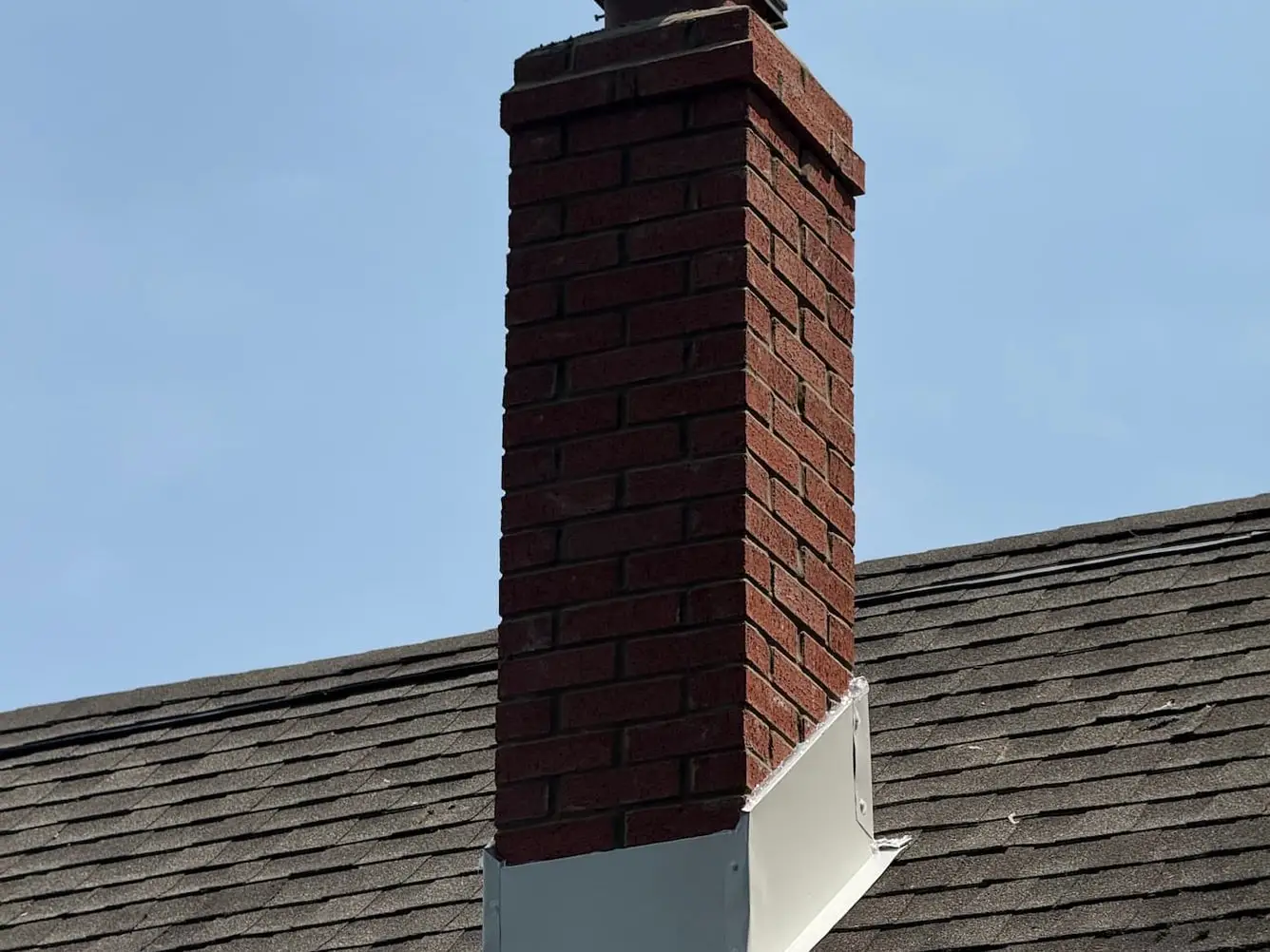
Chimney repair in Essex County, NJ
Most homes in Glen Ridge, Montclair and Maplewood were built before 1940, and a house that old usually has a brick chimney. Caught early, worn mortar and a cracked crown are a repair. Left alone, the water keeps working deeper into the brick.
NJ HIC 13VH13268400 · Licensed and insured · Free inspection · Open 24 hoursModern Home Roofing & Chimney repairs brick chimneys on houses across Essex County, NJ, including Glen Ridge, Montclair, Nutley and West Orange. Gas heats 71 percent of homes in the county, and an older furnace often sends its exhaust up the original brick flue. The work covers repointing, cracked crowns, caps and flashing. NJ HIC 13VH13268400.
Old brick, gas exhaust and a wet winter
Three Essex County towns share a 1938 median: Glen Ridge, Montclair and Maplewood. A chimney on one of those houses has stood through more than eighty winters. The mortar at the top, where the brick is open to the weather on every side, is usually the first to wash out.
Gas heats about 71 percent of homes in the county. When a furnace or water heater vents into a big old brick flue, the exhaust cools on the way up and some of its water vapor condenses inside. That water works into the mortar from the inside, where nobody sees it.
Essex County is in the northern part of the Central Zone, where winter storms often switch between rain and snow. A wet chimney that freezes overnight and thaws the next day loses a little more mortar each time.
So an Essex County chimney gets priced from the roof, with the flue in view, and never from the yard.
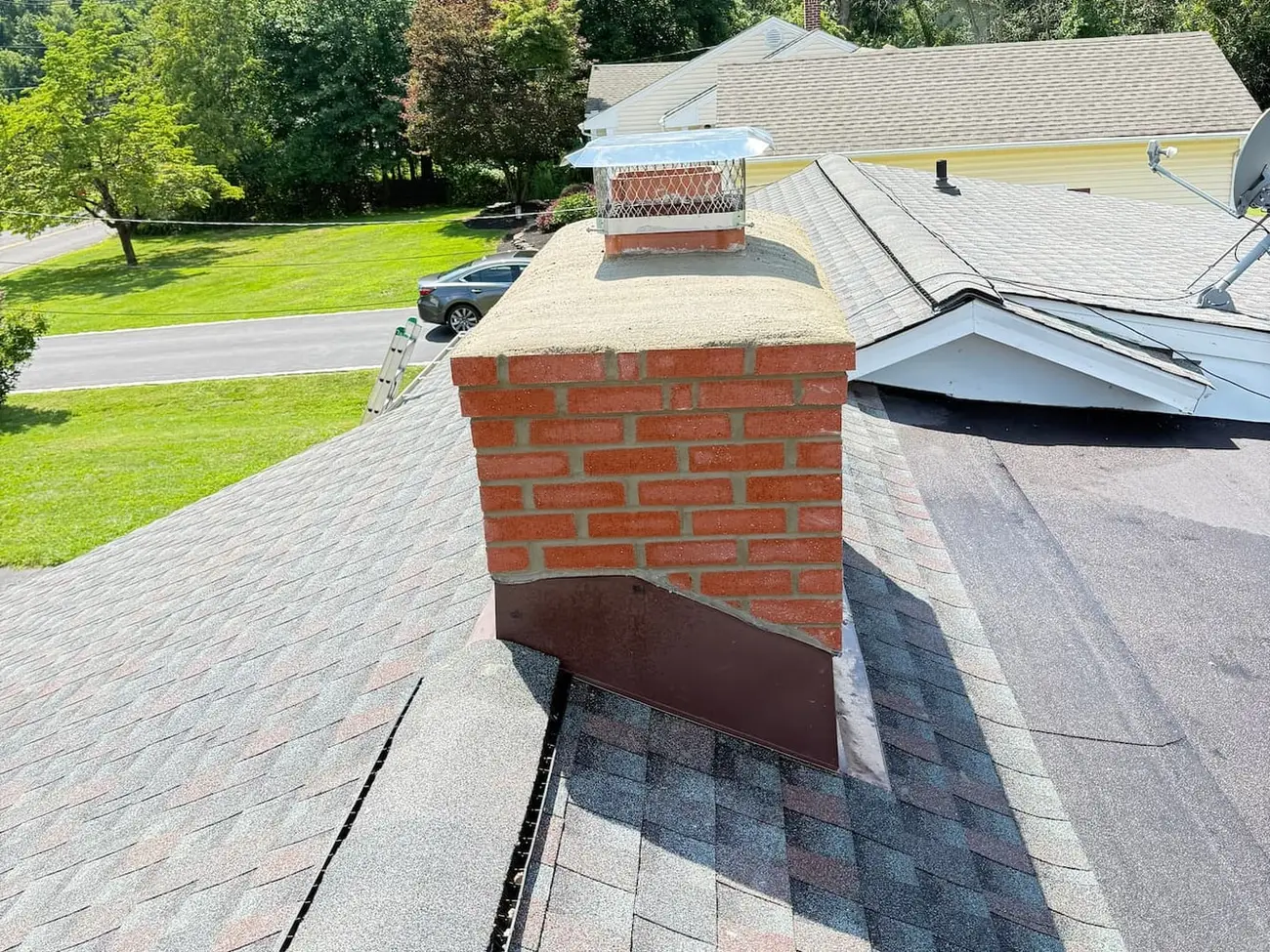
What we look at on an Essex County chimney
Most of what we need to see is above the roof line. We go up when it is safe to and photograph every side.
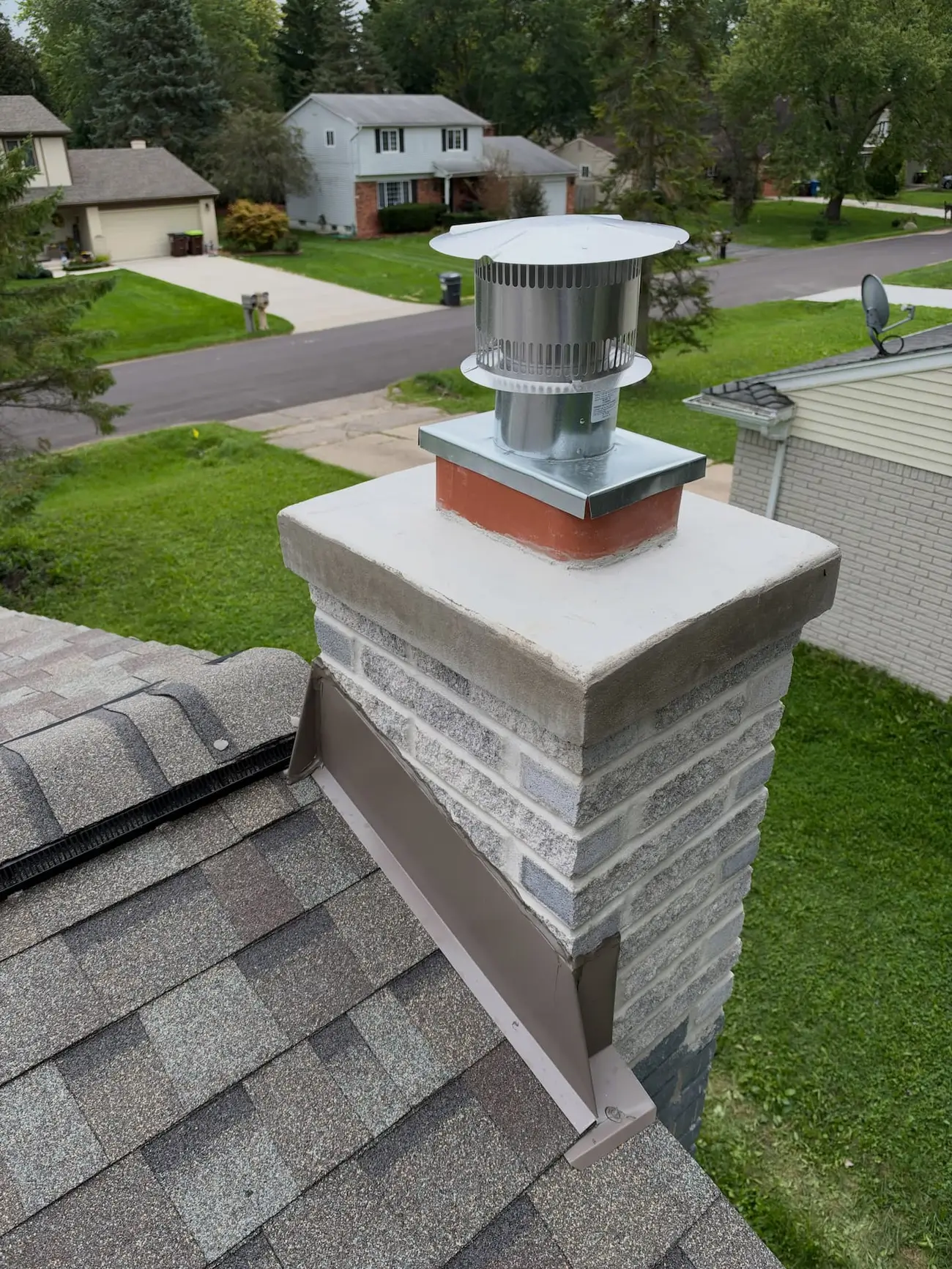
Up at the top, we check
- Hairline and through cracks in the crown, and any gap where it meets the brick.
- The highest courses, which on a 1930s house have taken the most weather.
- The flue opening, and as much of the liner as we can see from up there.
- A missing or rusted cap.
- Tar smeared over the flashing, a sign someone patched a leak there.
- Brick faces that have flaked off, a sign that water has been freezing inside them.
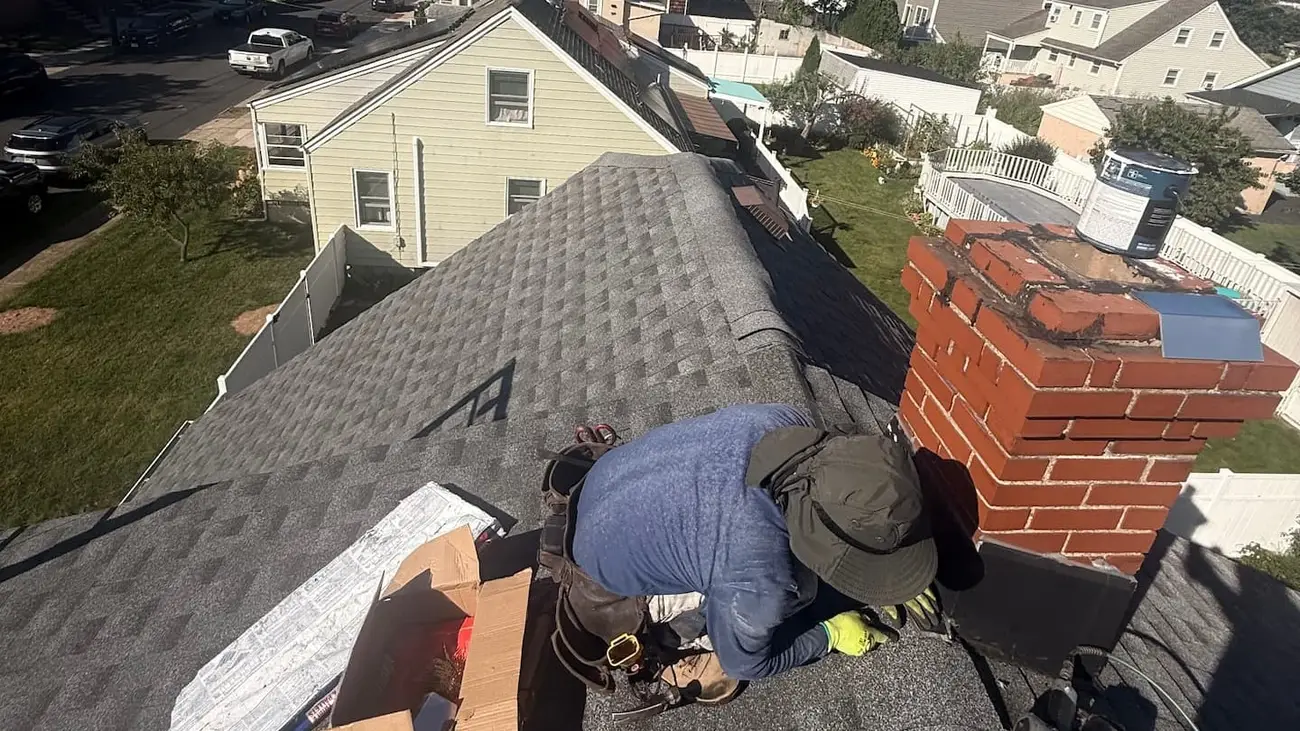
When the top courses move under a hand and the crown is cracked through, new mortar will not hold them. Then we price a rebuild. Chimney rebuilding in Essex County
How a chimney repair works in Essex County
The top of the chimney gets as much attention as the brick, because that is where most chimney leaks start. All seven steps are on the chimney repair page.
Free inspection
We get up to the top when it is safe to and photograph the cap, crown, flue, brick and flashing.
Written estimate
Which joints, which brick, what else needs work and the price, on paper. Any permit goes on it too.
Repoint and replace bad brick
We grind out the failed mortar, pack in new mortar and tool it to shed water. Cracked brick comes out and new brick goes in.
Fix the top and clean up
If the crown is cracked, the cap is missing or the flashing has lifted, that is on the estimate too. Then we clear the roof and the ground and show you the photos.
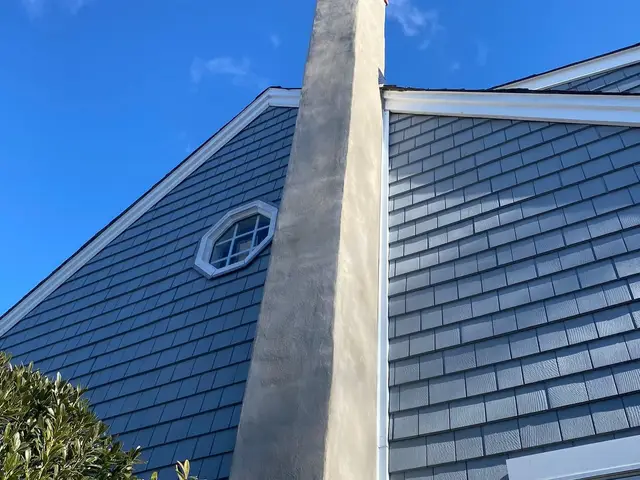
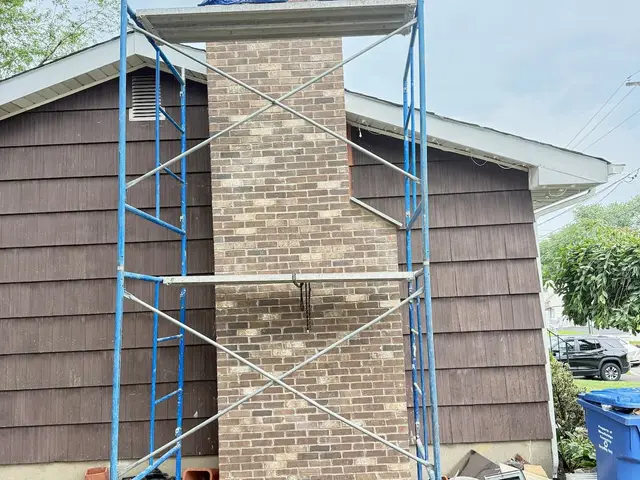
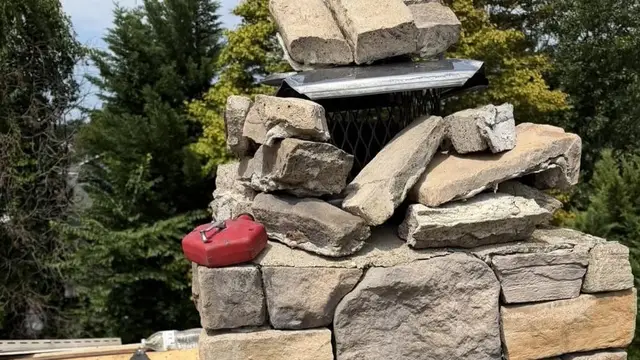
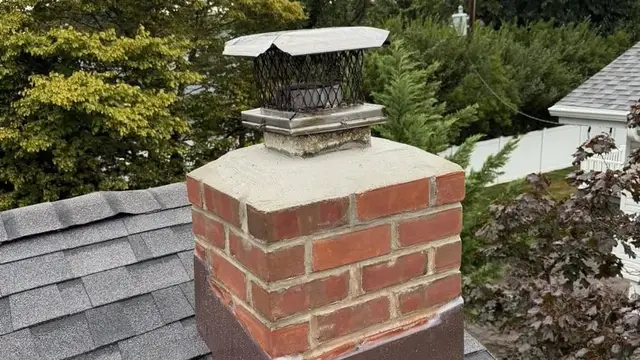
Do you need a permit for chimney repair in Essex County?
It depends on your town. Chimney masonry is not on New Jersey's list of ordinary maintenance or minor work, so the construction office in your town decides what paperwork it needs. Montclair has local historic districts, where exterior work needs a certificate of appropriateness, though repair or exact replacement that does not change how the house looks is exempt. We check with your town before we start, and any permit goes on the estimate.
What you can check on us first
- Our New Jersey Home Improvement Contractor license is 13VH13268400. Look it up with the Division of Consumer Affairs.
- We carry insurance and can send you the certificate before work starts.
- The inspection is free, and the estimate comes to you in writing.
- We are open 24 hours.
If it is in Essex County, yes. We cover all 22 municipalities, from Belleville to West Orange. Put your ZIP code in the estimate form and we confirm it when we call you back.
It can be. Some older chimneys were built with no liner, and some liners have cracked. We look down the flue from the top where we can and tell you what we see. If the liner needs work, it goes on the estimate as its own line.
It can be either, and sometimes both. Water gets in through a cracked crown, open joints or failed flashing. We work on roofs and chimneys, so we check all three and tell you where it is coming from before we price the fix.
Four things drive it: the number of open joints, the number of cracked bricks, the height above the roof, and the state of the crown, cap and flashing. We do not quote over the phone. The written price follows the inspection, once we have seen all four sides of the top.
Your town decides. Chimney masonry is not on the state's list of work that skips the permit process, so we call your construction office before we start, and any permit goes on the estimate. In a Montclair historic district, a repair that does not change how the house looks is exempt from the certificate of appropriateness.
Find out what is happening at the top of your chimney
Send your town and what you have noticed: falling mortar, stains on the brick, a leak beside the chimney. We call you back shortly. The inspection is free, and the photos from the top come with a written price.
Or call 732-682-9251