
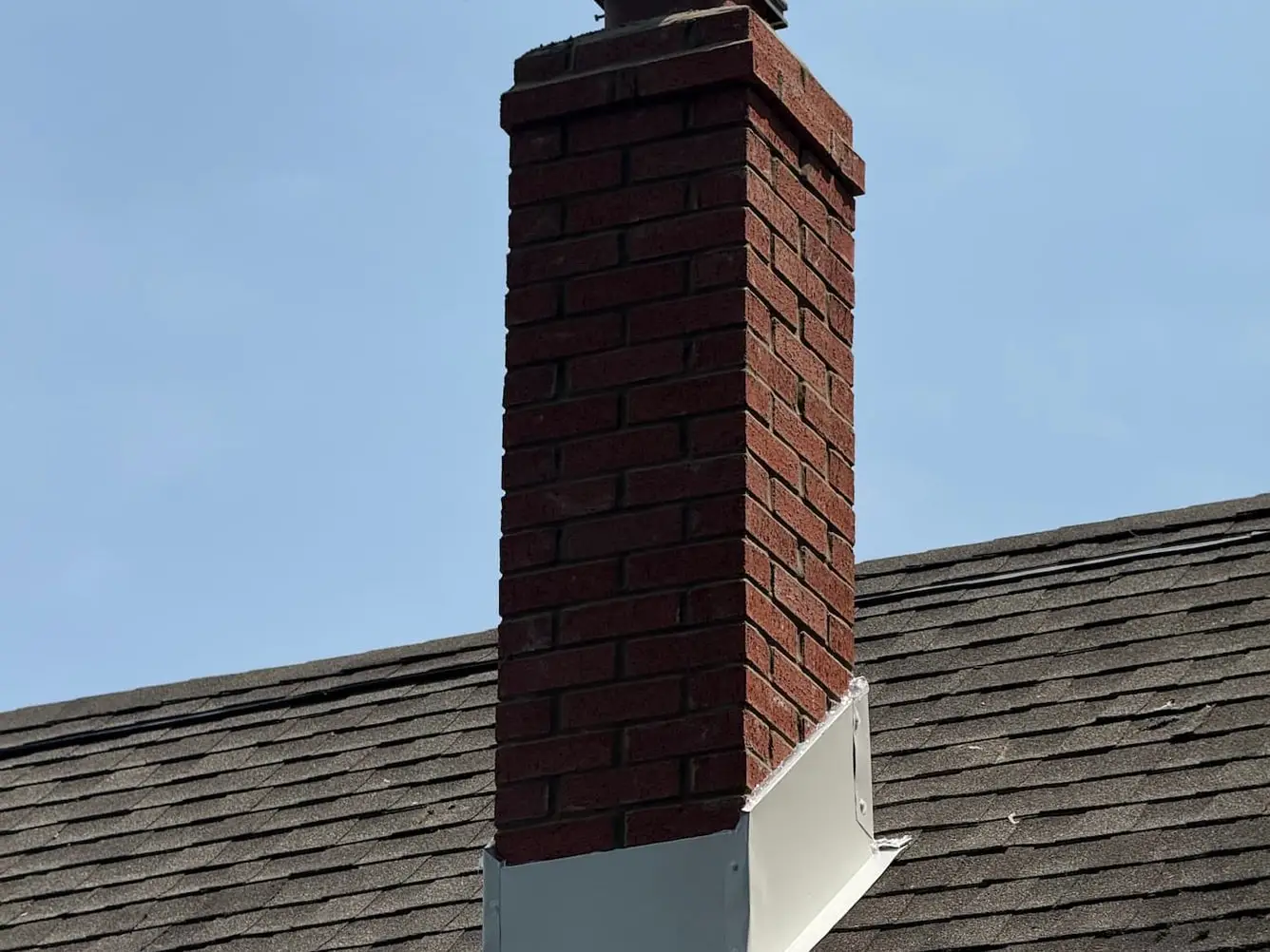
Chimney repair in Sussex County, NJ
Nearly half the homes in Sussex County heat with oil, 12 percent with propane and 4 percent with wood. Whatever burns in the house, the chimney carries what is left of it. We look at the top and down the flue before we price a repair.
NJ HIC 13VH13268400 · Licensed and insured · Free inspection · Open 24 hoursModern Home Roofing & Chimney repairs brick chimneys on houses across Sussex County, NJ, including Stanhope, Hopatcong, Byram and Stillwater. Almost half the homes in the county heat with oil, and many vent a boiler or a wood stove up a masonry chimney. We repoint joints, rebuild crowns and reseal flashing after a look down the flue. NJ HIC 13VH13268400.
The county that still heats with oil
Oil heats 48 percent of homes in the county, about eight times the state rate. The share climbs to 81 percent in Stanhope, 63 in Hopatcong, 62 in Byram and 60 in Wantage. An oil boiler sends soot and moisture up the flue, and in a cold flue part of that moisture condenses before it gets out. It soaks the mortar near the top and works on the clay liner.
Propane covers another 12 percent of homes, and its exhaust carries plenty of water vapor too. Wood is rarer but real: 8 percent of homes in Stillwater and Green, 7 percent in Wantage and Frankford. A wood stove leaves creosote in the flue, and a liner nobody has looked at in years can hide cracked tiles.
Then the weather does its part. Between the first frost, usually around October 7, and the last, around May 4, water in an open joint or a cracked crown can freeze and push the brick apart.
Nothing gets priced from the driveway. We climb to the crown, look down the flue as far as the light reaches, and send you every photo.
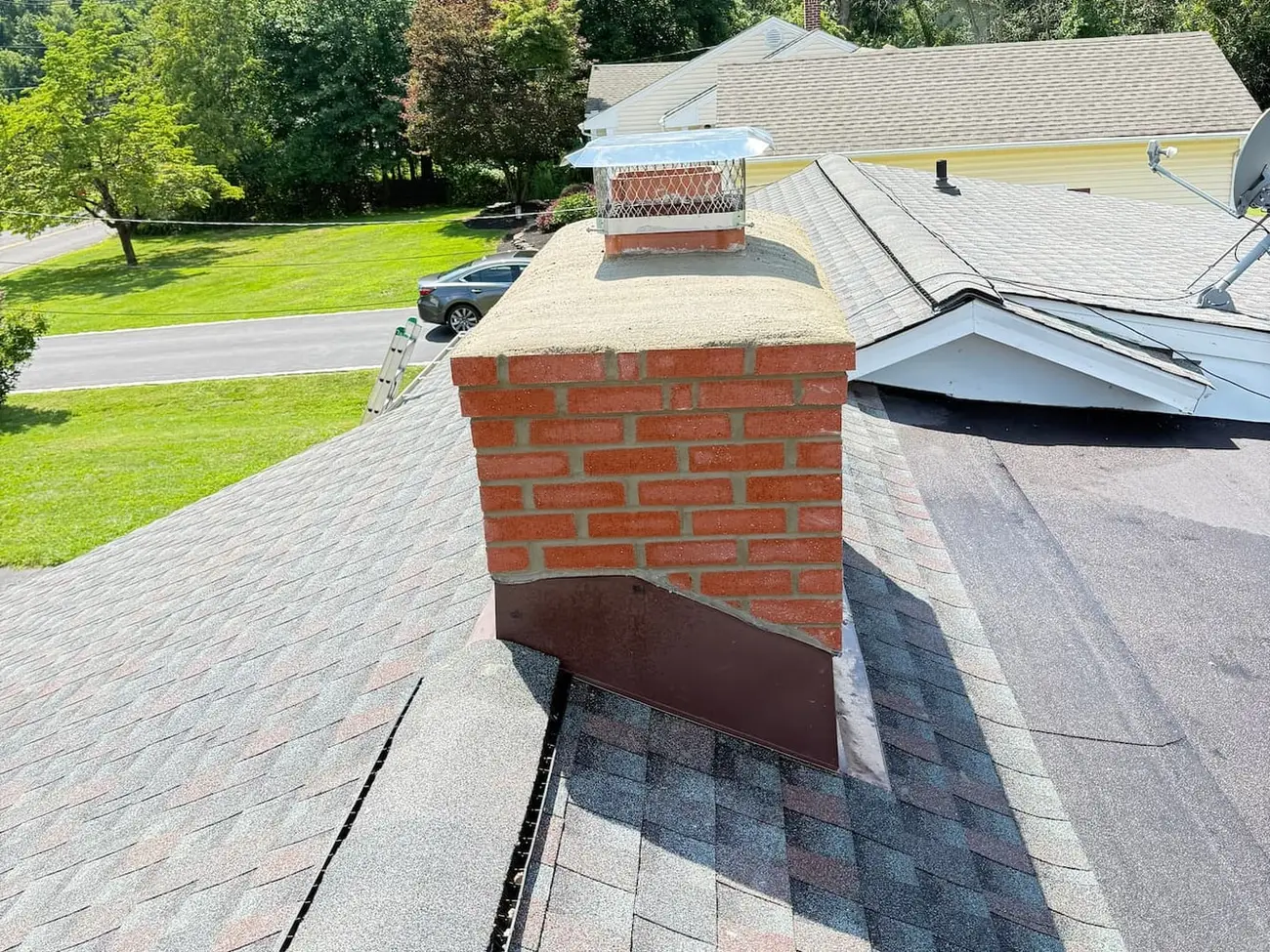
What we look at on an oil, propane or wood chimney
The fuel decides what the inside of the flue looks like. The weather decides the outside. We check both, starting at the top.
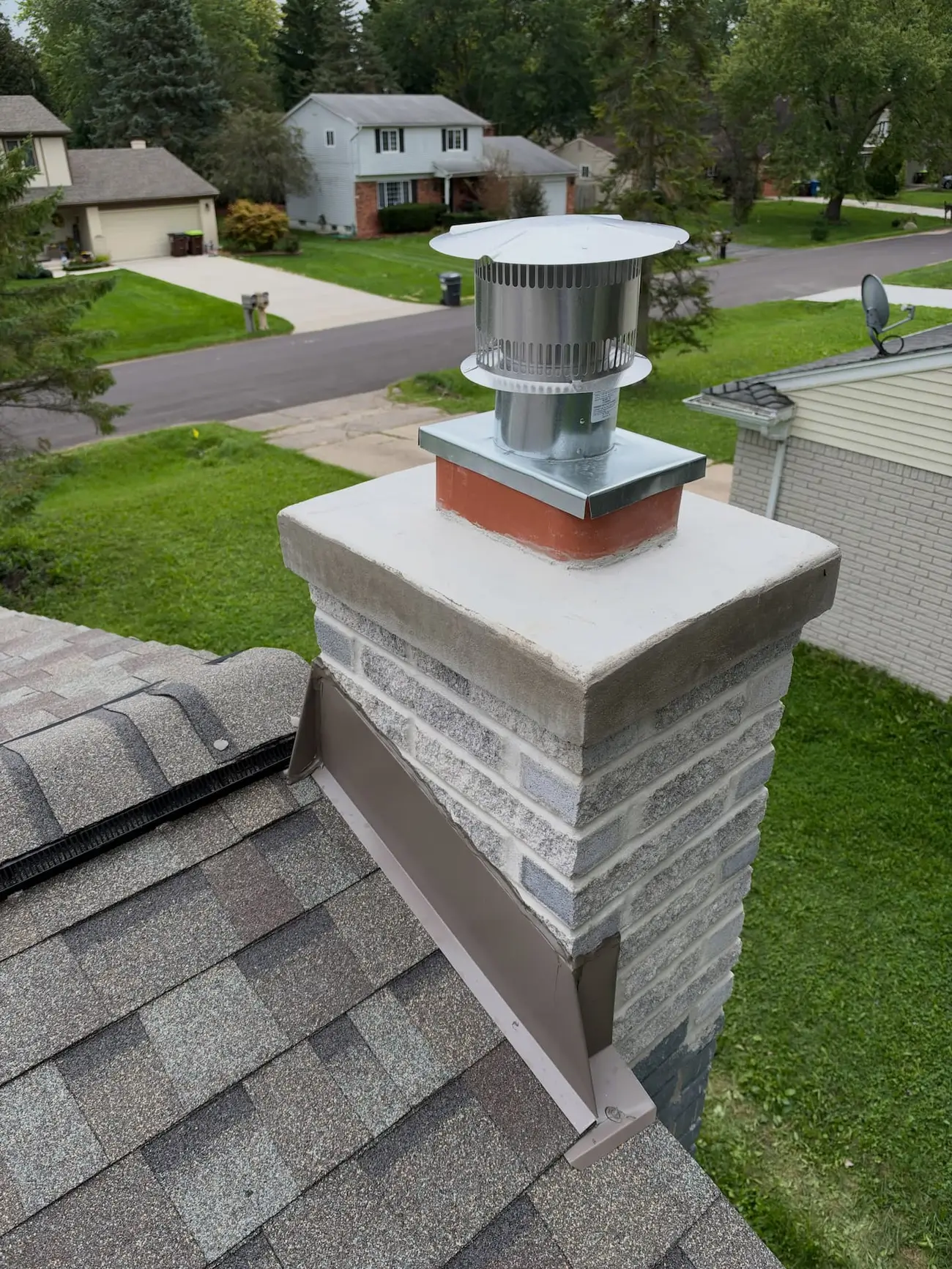
At the top of the chimney, we note
- Soot or creosote in the flue, as far down as we can see.
- Clay liner tiles that are cracked, shifted or missing.
- Soft or sandy mortar in the top courses.
- Cracks in the crown that let melt water into the brick.
- Whether a cap keeps snow and rain out of the flue.
- White salt stains or flaking brick faces on the outside.
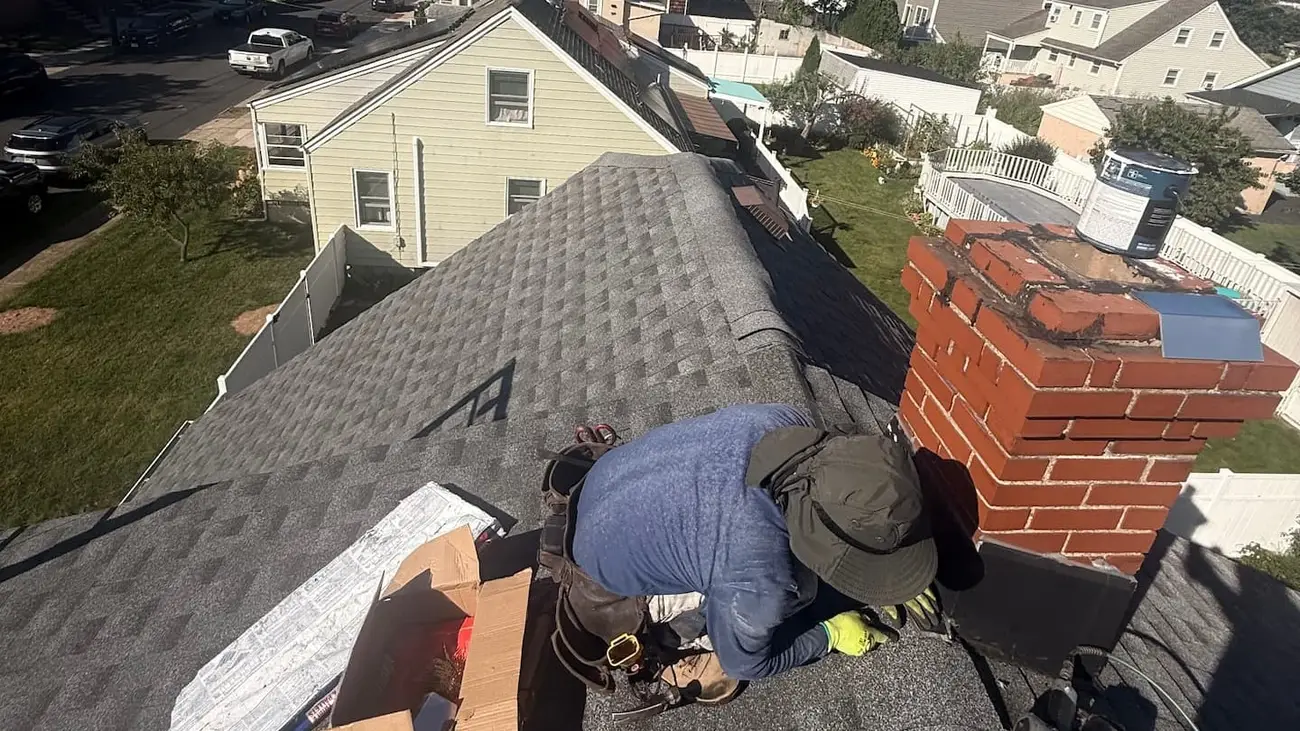
When the crown is split through and the top bricks move by hand, mortar alone will not fix it. Then we talk about a rebuild. Chimney rebuilding in Sussex County
How a chimney repair works in Sussex County
The top of the chimney gets as much attention as the brick, because that is where most chimney leaks start. All seven steps are on the chimney repair page.
Free inspection
We get up to the top when it is safe to and photograph the cap, crown, flue, brick and flashing.
Written estimate
Which joints, which brick, what else needs work and the price, on paper. Any permit goes on it too.
Repoint and replace bad brick
We grind out the failed mortar, pack in new mortar and tool it to shed water. Cracked brick comes out and new brick goes in.
Fix the top and clean up
If the crown is cracked, the cap is missing or the flashing has lifted, that is on the estimate too. Then we clear the roof and the ground and show you the photos.
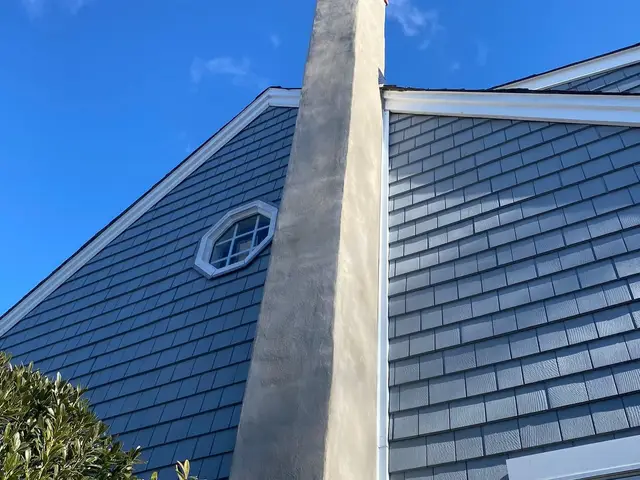
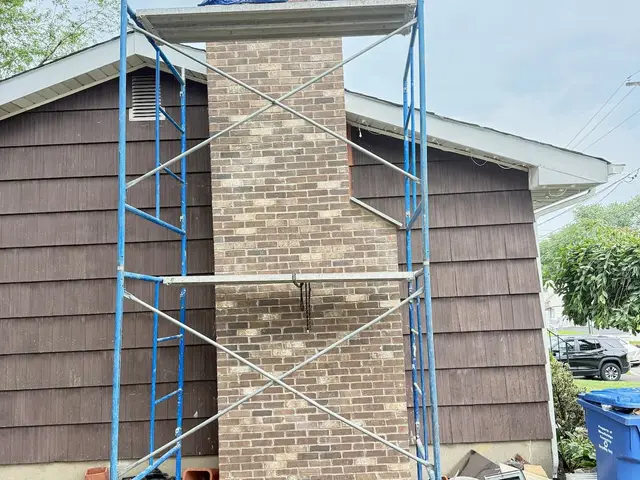
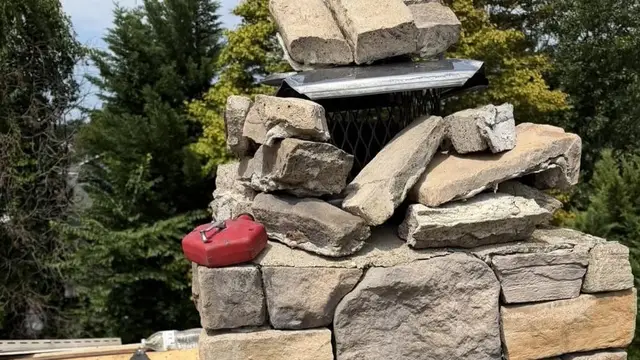
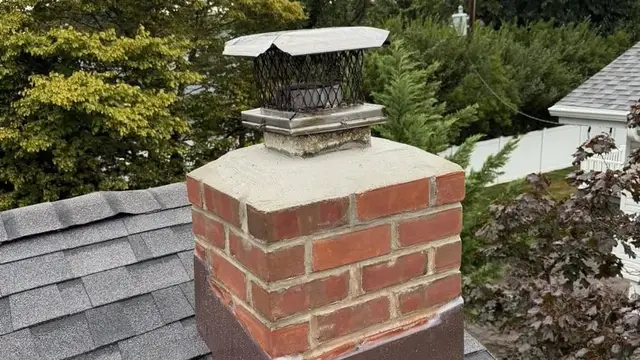
Do you need a permit for chimney repair in Sussex County?
It depends on your town. Chimney masonry is not on New Jersey's list of ordinary maintenance or minor work, so the construction office in your town decides what paperwork it needs. Newton has a historic district, where the Historic Preservation Advisory Commission reviews exterior work, though in-kind roof and siding repair does not need its review. We check with your town before we start, and any permit goes on the estimate.
What you can check on us first
- Our New Jersey Home Improvement Contractor license is 13VH13268400. Look it up with the Division of Consumer Affairs.
- We carry insurance and can send you the certificate before work starts.
- The inspection is free, and the estimate comes to you in writing.
- We are open 24 hours.
If it is in Sussex County, yes. We cover all 24 municipalities, from Andover to Wantage. Put your ZIP code in the estimate form and we confirm it when we call you back.
Once a year if you use it. NFPA 211, the national fire safety standard for chimneys, calls for a yearly inspection of a chimney in use, whatever it vents. We look at the brick, the crown and the flue as far as we can see, and you get the photos.
Mortar grit or bits of clay tile at the base of the flue, white or dark stains on the outside brick, and a crown with cracks you can see from the yard. Any of them can mean moisture is getting into the masonry. We look at it during the free inspection.
If the new furnace or water heater still vents up it, yes. Propane exhaust carries water vapor, and a flue sized for an old oil boiler can run cold with a smaller appliance, so more of that water condenses inside. We find out what vents into it, then look down the flue where we can.
How many joints need repointing, how many bricks are cracked, and whether the crown, cap or flashing needs work. Height matters too, since a taller stack takes more setup. We do not quote over the phone. Once we have been up to the crown, the price goes on paper.
The town decides. Chimney masonry is not on either state list of work that skips a permit, so the local construction office makes the call. Before work starts we call the office, and whatever permit it wants is listed on the estimate. In Newton's historic district, the Historic Preservation Advisory Commission reviews exterior work, so we check with Newton too.
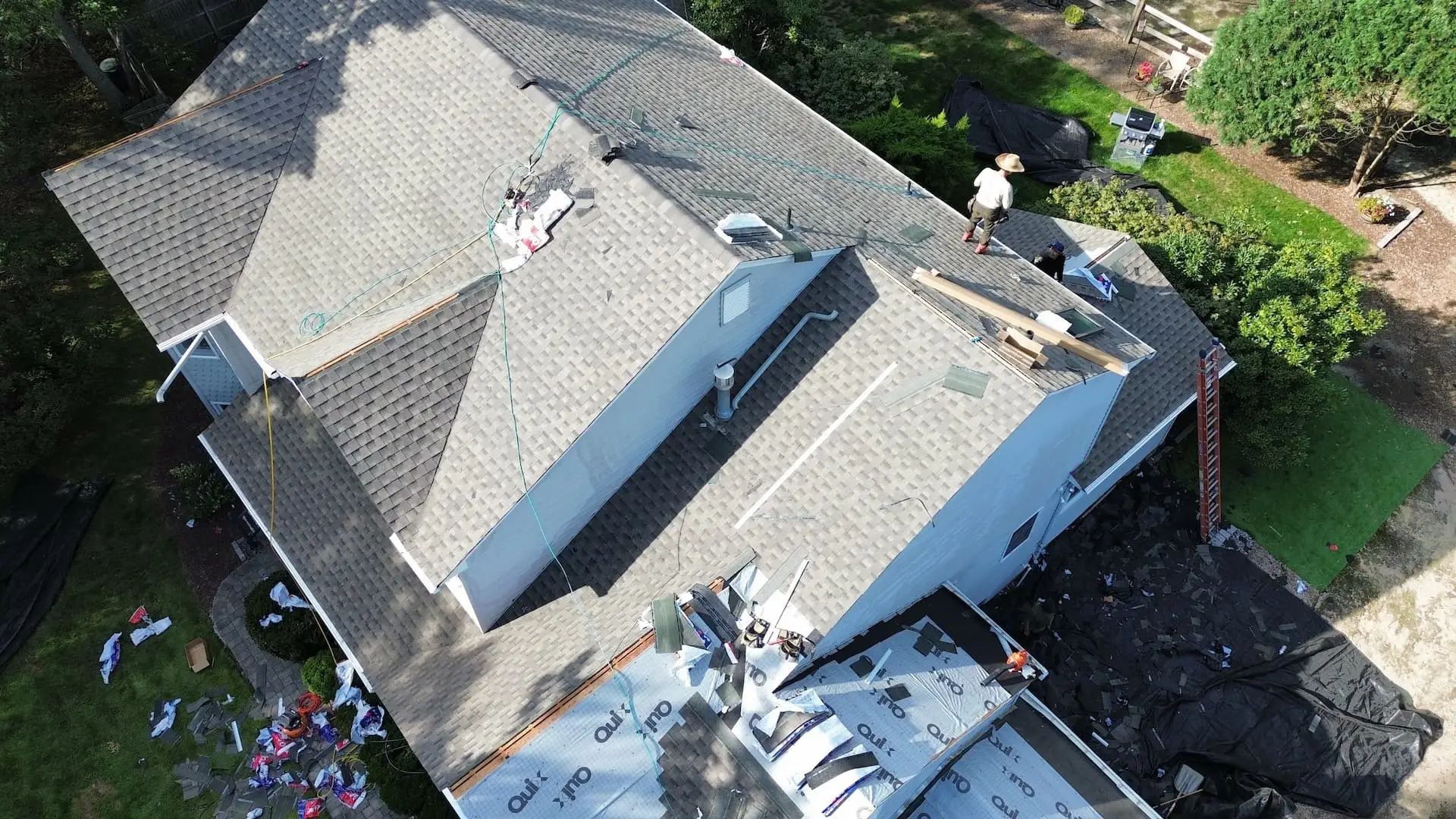
See what the winters have done to your chimney
Send us your town and what you have noticed. We call you back shortly and inspect the chimney for free. The photos and a written price come to you after. When repointing a few joints is enough, that is all we price.
Or call 732-682-9251