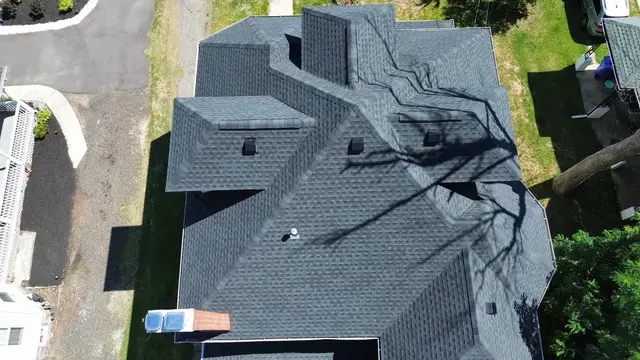
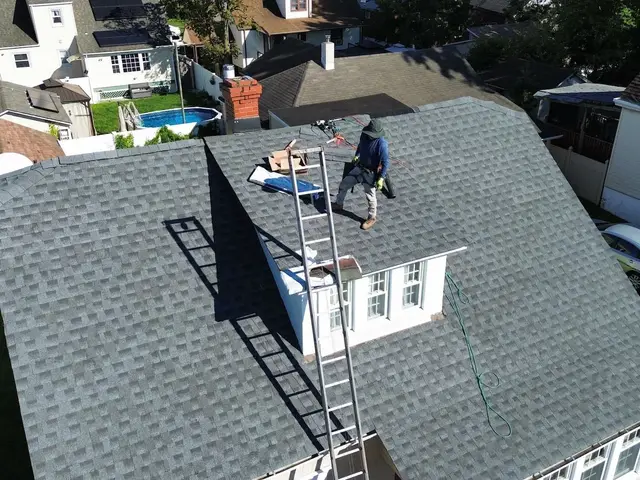
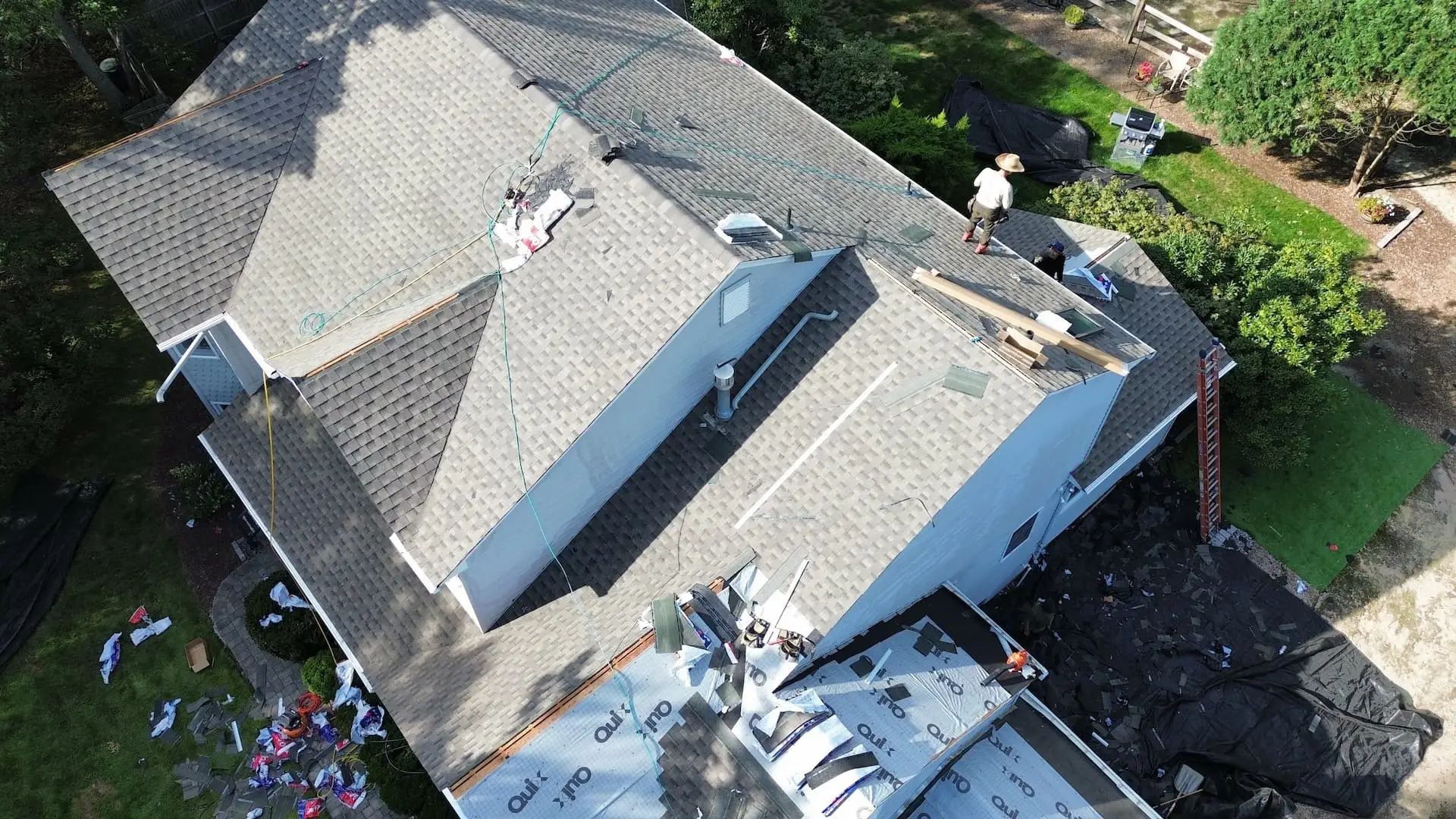
On attached buildings, the middle of the roof is rarely the first thing to go. Leaks start at the edges: the seam where your roof meets the next building, the flashing against a taller wall, and the low spots on a flat roof where water sits after rain.
Fewer than 3 in 10 Hudson County homes are lived in by their owners, against nearly 2 in 3 statewide. Often the person who sees the stain is a tenant, and the owner hears about it later. In a two- to four-family building, roof water can travel past the top floor before it shows. With your tenants' okay, we look in every unit it could have reached.
Winter here often brings storms that switch between rain and snow, since the Central Zone begins along the harbor and the Lower Hudson. Slush freezes overnight in the low spots and around the drains, and the next thaw pushes water into any seam that has opened.
So we do not patch wherever the ceiling is wet. We find where the water gets in, on your roof or at the seam, and you see the photos before we fix anything.