Short answer
Usually not, on a detached one- or two-family house. New Jersey's construction code calls replacing the roof covering or the siding on those houses ordinary maintenance, with no permit and no notice. The exceptions are attached homes, polypropylene siding, work that turns structural, and historic districts, which run their own review.
What ordinary maintenance means in New Jersey
New Jersey has one construction code for the whole state, enforced by each town’s construction office. Most work needs a permit. Some work is classed as ordinary maintenance, and for that, the code is clear: “No permit for, inspections of, or notice to the enforcing agency of ordinary maintenance shall be required.”
The rule is N.J.A.C. 5:23-2.7. It lists painting, trim, flooring, screens, gutters, and the two items most homeowners are asking about: roofs and siding. The wording of each one decides who it covers, so it is worth reading closely.
The roof rule, word for word
The code lists “the repair or replacement of existing roof covering on detached one- and two-family dwellings” as ordinary maintenance.
Three parts of that sentence do the work.
“Existing roof covering.” This is the shingles, slate or other material on the surface of the roof, and what goes under them. Replacing the covering is maintenance. Changing the roof itself, such as its shape, its framing or its structure, is not.
“Detached.” The house stands on its own, with no shared wall. A townhouse, a row house or one half of a twin is attached, so the rule does not reach it.
“One- and two-family dwellings.” A single-family house or a two-family house. A three-family house or a larger building is outside the rule.
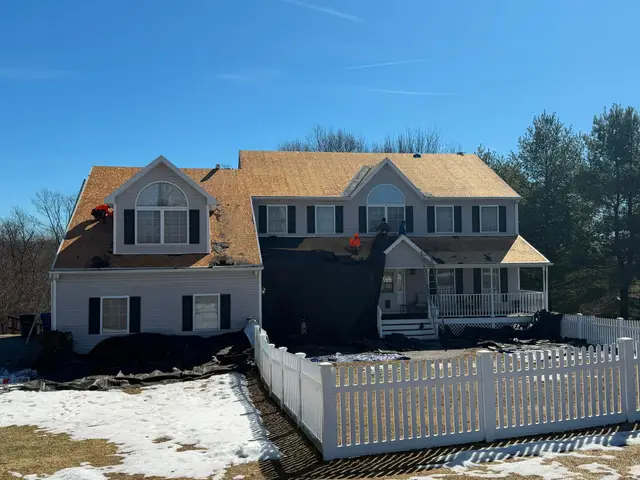
So on a detached single-family or two-family house, a tear off and a new roof is ordinary maintenance. Repairing part of the roof is too.
Where the roof rule stops
Attached houses
If your home shares a wall with another one, the roof is not on the ordinary maintenance list. That does not always mean a full permit. The minor work rule, N.J.A.C. 5:23-2.17A, covers “renovation or alteration work in an existing one or two-family dwelling” when no primary structural members are altered. Under minor work, someone gives the construction office notice before the job starts and files a permit application within five business days. Your construction office decides which path the job takes.
When the job turns structural
The ordinary maintenance rule excludes “any work affecting structural or fire safety,” along with cutting structural beams or bearing supports. A reroof can turn into that. If the old roof comes off and the rot goes past the roof boards into the rafters, repairing the rafters is structural work, and it needs the town’s involvement before it continues.
This is one reason we do not price a roof from the street. What is under the shingles decides whether the job stays maintenance.
Larger buildings
A roof on a three-family house, an apartment building or a commercial building is not covered by the roof item at all. Expect a permit.
The siding rule
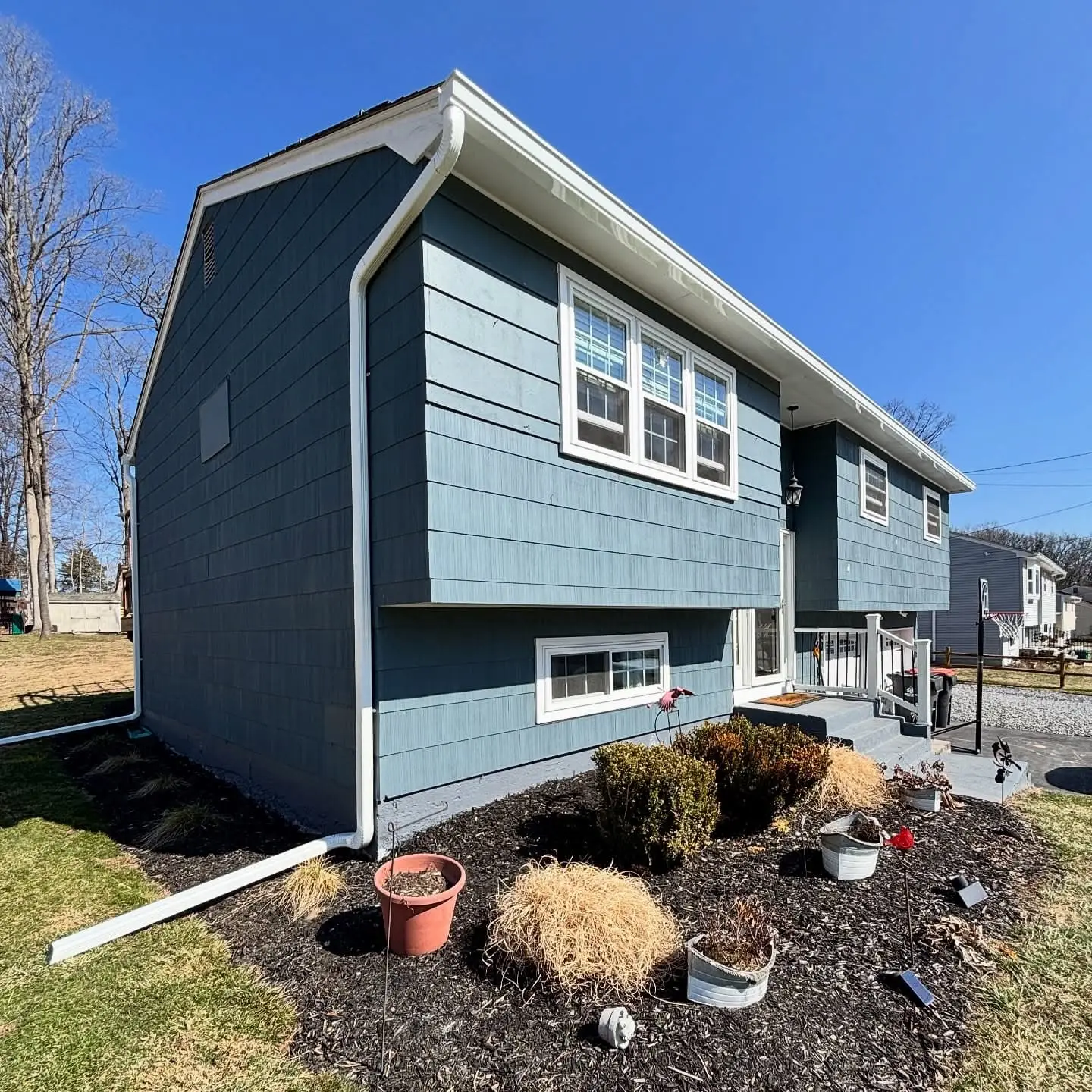
The siding item reads differently: “the repair or replacement of existing siding on one- and two-family dwellings.”
The word “detached” is missing. As written, new siding on an attached one- or two-family house, a townhouse or a twin, is ordinary maintenance too, where a new roof on the same house is not.
The rule also does not say the new siding has to match the old material. As written, replacing wood siding with vinyl on a one- or two-family house is still ordinary maintenance.
The polypropylene exception
The rule carves out one material: “The repair or replacement of polypropylene siding shall not be ordinary maintenance.” Polypropylene siding is usually molded panels made to look like cedar shakes or shingles. It is a different plastic from vinyl siding, which is PVC. If your project involves polypropylene, on the old wall or the new one, talk to the construction office first.
Larger buildings
For anything other than a one- or two-family house, siding repair or replacement is ordinary maintenance only “with like material not exceeding 25 percent of the total building exterior wall area.” Past that, or with a different material, expect a permit.
Historic districts run their own review
The construction code is not the only set of rules on a house. Many New Jersey towns have historic districts, and their commissions review exterior work on their own terms, whatever the code says about permits. Roofs and siding are exactly what they look at.
How strict that review is depends on the town:
- In Ocean Grove, part of Neptune Township, any exterior work, even a like-for-like roof, needs a certificate of appropriateness from the Historic Preservation Commission first.
- In Beach Haven’s historic district, even replacing the roof on a one- or two-family house needs a certificate of appropriateness first.
- In Hoboken’s historic districts, exterior work visible from the street goes to the Historic Preservation Commission, and even an in-kind repair gets a certificate of no effect from it.
- In Ridgewood and Montclair, exterior work in a historic district needs the town’s approval, though a like-for-like replacement can skip the commission review.
If you are not sure whether your street is in a district, the town planning or zoning office can tell you. Our county pages note local historic district rules where we have confirmed them.
No permit does not mean no rules
Skipping the permit does not change how a roof should be built. In Sussex County, for example, the state requires an ice barrier along the eaves, a waterproof layer under the shingles at the bottom edge of the roof. Why that matters is explained in Ice Dams in New Jersey: Why They Form and How to Stop Them.
Homeowners associations and condominium associations have their own rules too. Those are a contract between you and the association, separate from the construction code, and they often cover color, material and timing. Read them before you sign anything.
What about gutters and chimneys?
Gutters are the easy one. “The repair, replacement, or installation of exterior gutters and leaders” is ordinary maintenance on any building.
Chimneys are the opposite. Chimney masonry is not on the ordinary maintenance list, and work that affects fire safety never counts as maintenance. The details are in Do You Need a Permit to Repair a Chimney in New Jersey?
How to check for your house
- Is the house detached, and how many families live in it? That answers the roof question for most people.
- What is the siding made of, old and new? If either one is polypropylene, call the town.
- Is the house in a historic district? If it is, the commission comes first.
- Is there an association? Read its rules on roofs and siding.
- Call the municipal construction office if anything is unclear. It is part of town hall, and it makes the final call.
Our written estimate covers the scope, the materials, the number of days and the price, on paper. Any permit goes on it too. If you are planning a full tear off, start with roof replacement, and for new walls, siding replacement.
Questions people ask about roof and siding permits
Do I need a permit to replace the roof on a townhouse in New Jersey?
Probably some kind of filing. The ordinary maintenance rule covers roofs on detached one- and two-family houses only, so a townhouse or twin falls outside it. Many of those jobs can go through the minor work process, with notice before work starts and a permit application within five business days. The town's construction office decides.
Can I switch from wood siding to vinyl without a permit?
On a one- or two-family house, yes, as the rule is written. The code lists the repair or replacement of existing siding on those houses as ordinary maintenance and does not require the same material. The exception is polypropylene siding. A historic district or an association can still have its own rules about materials.
Does a roof repair need a permit in New Jersey?
Not on a detached one- or two-family house. The code lists the repair or replacement of existing roof covering on those houses as ordinary maintenance. That changes if the repair reaches the rafters or other framing, because work affecting structural safety never counts as maintenance, or if the house is in a historic district.
Does my contractor have to tell the town about a new roof?
Not for ordinary maintenance. The code says no permit, no inspection and no notice to the town are required for it. Attached houses, structural repairs and historic districts are different, and a good contractor should tell you which one your job is before it starts.
Sources
- N.J.A.C. 5:23-2.7, Ordinary maintenance. Legal Information Institute, Cornell Law School. law.cornell.edu
- N.J.A.C. 5:23-2.17A, Minor work. Legal Information Institute, Cornell Law School. law.cornell.edu
- New Jersey Department of Community Affairs, Division of Codes and Standards. Bulletin 07-3, "Ice Dam Membrane/Ice Barrier." Revised June 2015.
- Neptune Township, Historic Preservation Commission (Ocean Grove); Borough of Beach Haven, Code 41-6; City of Hoboken, Historic Preservation Commission; Village of Ridgewood, Historic Preservation Commission; Township of Montclair, Historic Preservation.
Licensed New Jersey home improvement contractor, NJ HIC 13VH13268400. We repair and replace roofs, chimneys, gutters and siding in 14 New Jersey counties. Licensed and insured.
 GAF Certified roofing contractor