
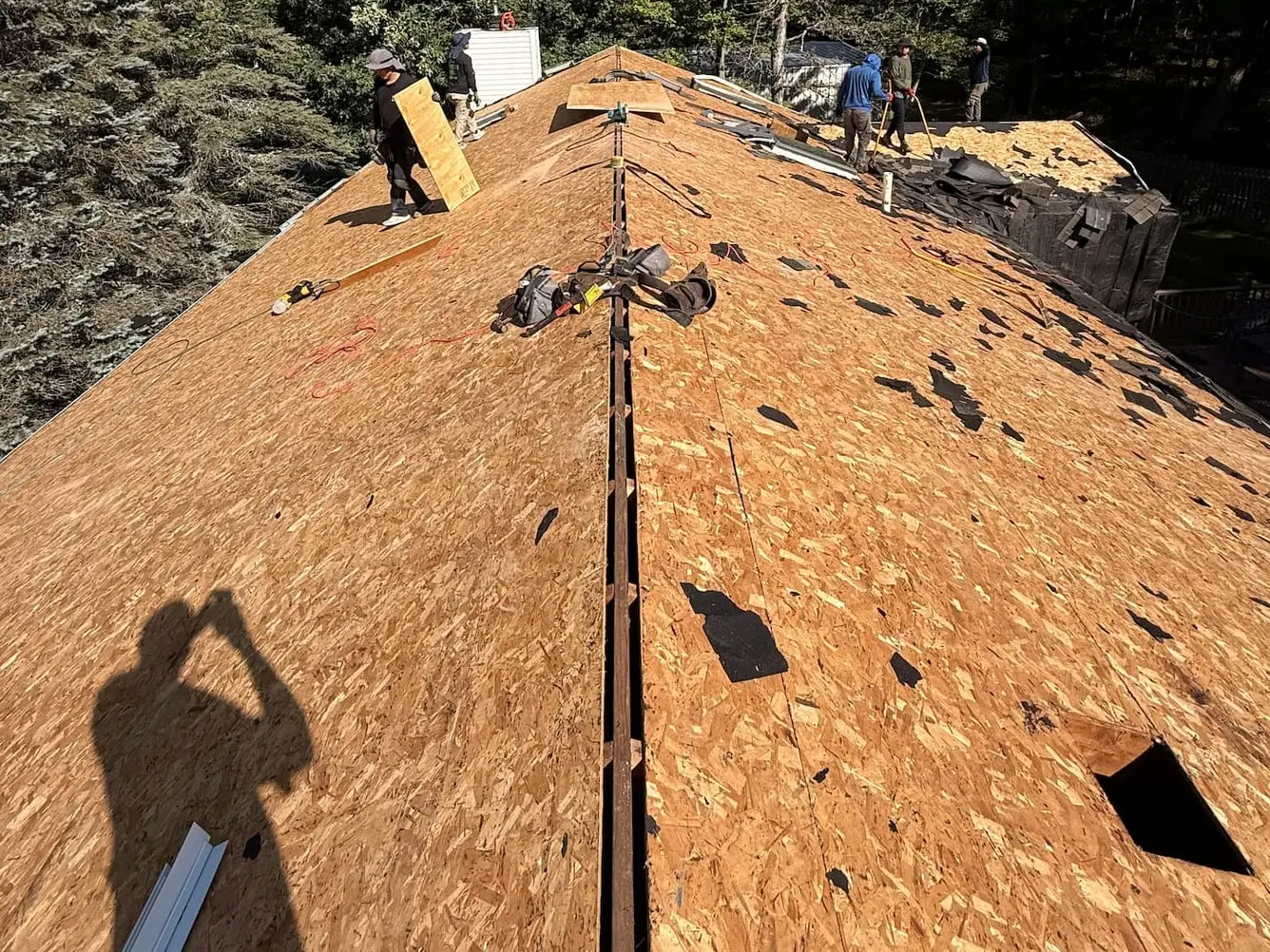
Roof ventilation in New Jersey
Ice builds along the gutters every winter, or the attic feels like an oven in July. A hot, damp attic wears shingles out from underneath and feeds ice dams. We check how air moves through the attic and add the vents it needs. We do this on houses in 14 New Jersey counties.
NJ HIC 13VH13268400 · Licensed and insured · Free inspection · Open 24 hoursModern Home Roofing & Chimney installs attic vents on houses in 14 New Jersey counties under NJ HIC license 13VH13268400. The vents let heat and moisture out of the attic, which keeps shingles from wearing out from underneath and cuts down on ice dams in winter. Every ventilation job starts with a free inspection, photos and a written estimate.
What a hot, damp attic does to your roof
In summer, the sun heats the attic, and with nowhere for that heat to go, the shingles bake from underneath. In winter, warm air from the house rises into the attic and melts the snow on the roof, and the water refreezes at the cold edge. The same attic can trap moisture too, which shows up as frost on the nails and damp roof boards.
You pay for it twice: shingles that wear out early, and ice dams that push water back up under them.
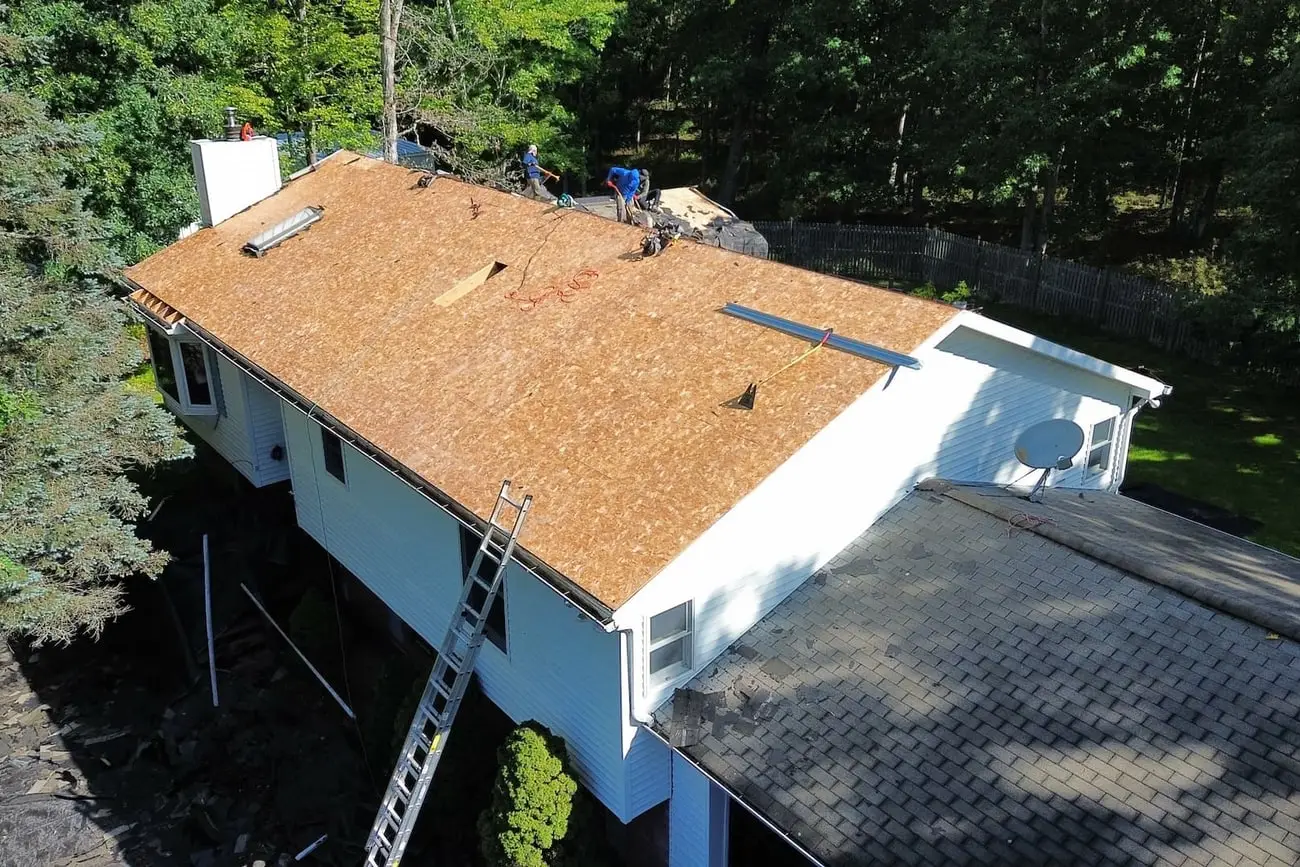
Signs your attic is not venting
- Ice builds up along the gutters every winter.
- The attic feels like an oven in July.
- Frost or water drops on the nail tips poking through the roof boards in winter.
- Dark staining or mold on the underside of the roof boards.
- Shingles curling or wearing thin on a roof that is not that old.
- Upstairs rooms stay hot in summer even with the air conditioning running.
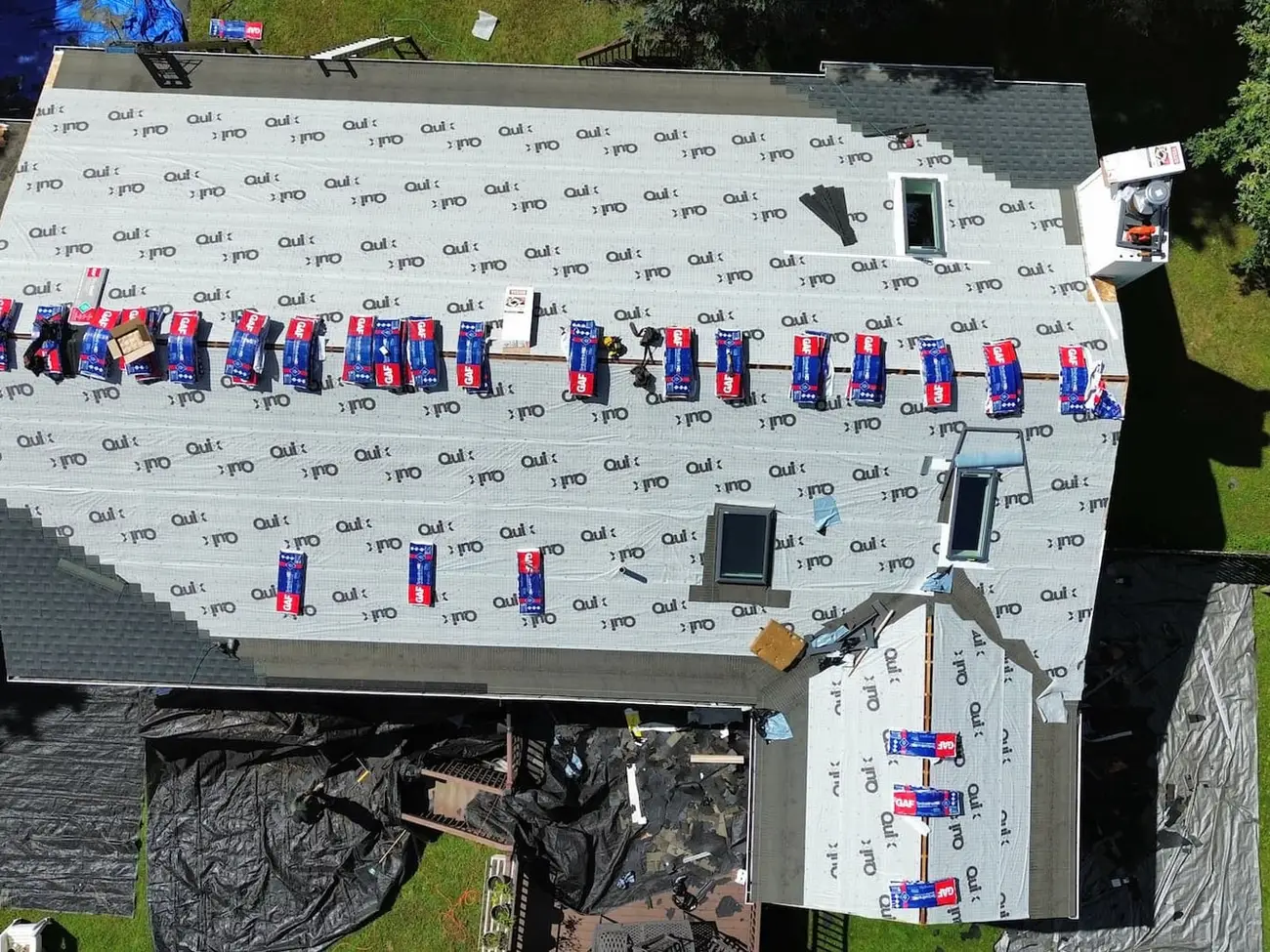
If the shingles are already worn out across whole sections, new vents will not bring them back. We tell you that and show you the photos. What a roof replacement involves
How a roof ventilation job works
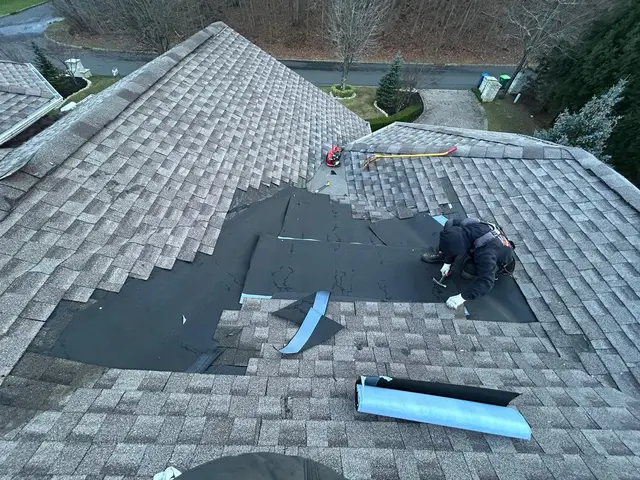
A roof ventilation job with us runs in six steps. The attic gets checked from the inside before anything is cut, and your written estimate lists how long the work will take.
We inspect the attic and the roof, free
We go into the attic, look at the underside of the roof boards and the insulation, check the vents that are already there, and photograph what we find.
You get a written estimate
What the attic needs, where it goes and the price, on paper. If ventilation is not the real problem, we tell you that instead.
We open up the intake
Where insulation is packed into the eaves and covering the soffit vents, we fit baffles between the rafters so outside air can get in along the bottom of the roof.
We cut in the exhaust
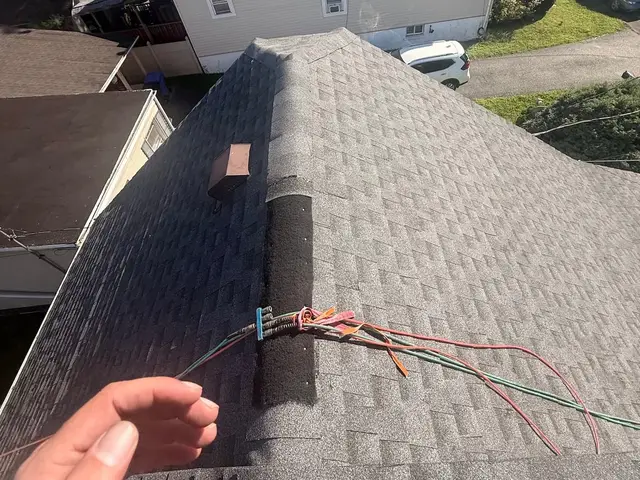
Along the peak, we cut a slot through the roof deck so warm air can leave at the highest point, then cover it with a ridge vent and ridge cap.
We close off vents that fight each other
Some attics have a mix of vents that short circuit the airflow, like a gable vent pulling air in right next to the ridge. Where that happens, we close off the ones working against the rest.
We clean up and walk you through it
We run a magnet over the lawn and driveway for nails before we leave, and go over photos of the work with you.
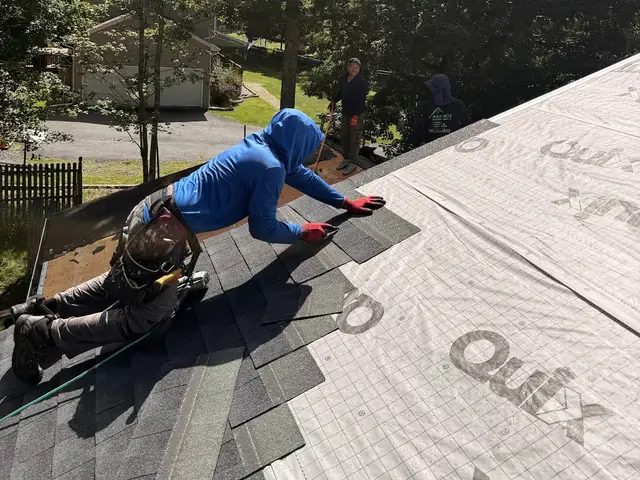
How air moves through an attic
Attic ventilation works as a loop. Cool air comes in low, warm air goes out high, and the attic in between stays close to the temperature outside.
Soffit vents
Openings under the roof overhang. This is where outside air comes in, at the lowest point of the attic.
Baffles
Channels between the rafters that keep insulation off the soffit vents, so the incoming air has a clear path up.
The attic space
Air moves up along the underside of the roof boards and carries heat and moisture with it.
Ridge vent
A vent along the peak where the warm, damp air leaves at the highest point of the roof.
Other exhaust vents
Box vents, gable vents and powered fans also let air out. Mixed with a ridge vent, they can pull air from the wrong place and leave parts of the attic still.
Bathroom and kitchen fans
These should vent outside, not into the attic. A fan that empties into the attic fills it with the moisture the vents are trying to get rid of.
Attic too hot, or damp in winter?
Get a free inspection
What else affects the air in your attic
Vents and insulation work together
Vents move air through the attic. Insulation on the attic floor keeps the heat of the house from getting up there in the first place. An attic with plenty of vents and thin insulation can still grow ice dams.
Where your house is changes the problem
Farther north and west, in Sussex, Warren, Morris and Hunterdon, the usual complaint is ice along the gutters. Snow melts off a warm attic, refreezes at the cold edge of the roof, and backs water up under the shingles. Across the whole state, summer heat in a poorly vented attic bakes shingles from underneath.
Related work
Getting a new roof anyway? With the old roof off, the ridge is already open: Roof Replacement. Ice in the gutters every winter? See Gutter Installation. Want the whole roof looked at? See Roof Inspections.
Check us out before we cut into your roof
It depends on the size of the attic, what vents are already there, whether insulation is blocking the eaves, and whether the ridge has to be opened up. We do not quote over the phone. You get a written price after we have been in the attic and on the roof.
It helps, but it is not the whole answer. Ice dams start when heat from the house warms the roof and melts the snow. Vents carry some of that heat out. Air leaks and thin insulation on the attic floor let it in. If your ice dams come from more than the vents, we tell you.
Not every house does. A ridge vent works when there is intake at the soffits to feed it and a clear path up through the attic. Without that intake, it does very little. We look at what your attic already has before we tell you what it needs.
Warm, damp air from the house is getting into the attic and hitting the cold nails and roof boards, where it condenses or freezes. When it warms up, it drips. It usually means the attic is not moving enough air out, or a bathroom fan is emptying into it.
Not always. A powered fan pulls air out fast, and if the attic does not have enough intake, it can pull cooled air up out of the house through gaps in the ceiling. It can also fight with a ridge vent. Whether one makes sense depends on the rest of the attic, and we tell you what we see.
It is the easiest time to do it. With the old roof off, the ridge is open and the deck is bare, so there is less to take apart. Tell us at the inspection and the ventilation goes on the estimate, so you can see each price and choose.
We work on roof ventilation in Bergen, Essex, Hudson, Hunterdon, Mercer, Middlesex, Monmouth, Morris, Ocean, Passaic, Somerset, Sussex, Union and Warren counties. If your town is in one of those, we can come out.
Find out what your attic is doing to your roof
Tell us what you are seeing. We come out, check the attic and the roof for free, and give you photos and a written price. If vents will not fix it, you will hear that from us. If you hire someone else, you owe us nothing.
Open 24 hours · NJ HIC 13VH13268400 · Licensed and insured